Accréditation Sans Frontières

International Accreditation of Healthcare Facilities

About ASF

An independent accreditation body.
Built for the hospitals the others cannot reach.

Accréditation Sans Frontières is an international accreditation body, headquartered in Paris. We accredit hospitals, ambulatory clinics, and primary care facilities across three programmes — in stable health systems and in places no other accreditor operates.

8+
years operational
50+
facilities in Georgia pilot
3
offices: Paris · Geneva · Tbilisi
7
universal standards, open access

One circle, every setting

The patient’s full circle — not just the visit.

ASF assesses the whole circle a person travels through a facility: how they arrive, what happens to them while they are there, how they leave, and — critically — what happens once they are home. The same seven standards apply to every category below; only the depth of evidence required changes with the setting. ASF is a non-profit working with facilities in every country, with a particular focus on health systems in transition and under strain, where the gap between what patients need and what existing accreditors reach is widest.

Hospital

The focus is small and medium-sized hospitals — a challenge that exists everywhere, not only where health systems are rebuilding. A 50-bed district hospital faces the same structural exclusion whether it sits in a wealthy country or a fragile one: no standard written for its scale, no surveyor who has walked its wards, no certificate its insurers or regulators recognise. ASF exists for the hospital too small to be seen by accreditors built for large, resource-rich institutions.

Ambulatory Care

Day surgery centres, specialist outpatient units, diagnostic facilities, primary care clinics, dental practices, and rehabilitation centres — the outpatient settings where most healthcare actually happens, assessed on their own terms rather than measured against a hospital standard built for a different environment.

Invasive Procedures

Any setting where a procedure penetrates the skin, alters tissue, or carries a genuine risk of infection or injury — body piercing, tattooing, and aesthetic injectable procedures such as Botox and dermal fillers. These sit in a genuine regulatory gap, often outside any clinical licensing framework at all. ASF assesses the procedure, not the business offering it — a salon offering both haircuts and microblading is assessed only on the microblading.

Fitness

Gyms, pools, and physical activity facilities — assessed for injury prevention and infection control, the same underlying safety questions asked of any setting where people put their bodies at risk, extended to a category no health-focused accreditor currently covers.

Medical Tourism

An endorsement layered on any of the four categories — pricing transparency, remote records transfer, travel and language logistics, and post-return follow-up for patients who travel for care.

Refugee & Migrant Health

Built directly against WHO’s Global Competency Standards for Health Workers (2022) — facility readiness to serve displaced and migrant populations with dignity, language access, and continuity of care regardless of legal status.

€1,000 per one-day assessment, plus travel. Every fee is disclosed transparently: 10% administrative costs, 10% supports ASF and PHIG’s public health and educational work, 80% goes directly to the assessors and advisors doing the work. Facilities that do not pass may reapply at any time, with no limit.

Quality assurance of the accreditor

Open standards. Built on international evidence.

ISQua EEA — the External Evaluation Association of the International Society for Quality in Health Care — independently evaluates whether an accreditation body’s own standards meet internationally recognised principles for quality, safety, and evidence-based practice.

ASF has chosen not to pursue this specific credential. ASF’s own standards are developed with reference to internationally recognised principles for quality, safety, and evidence-based practice, and are open for anyone to review.

ASF’s standards, self-assessment tools, and training are open to any facility, free, with no login required. Formal assessment is the only step that requires registration.

ASF quality credentials
Georgia pilot, 2021–2026
50+ facilities, national accreditation programme
Radically open standards
Free self-assessment, no login required
8+ years operational
Active accreditation programme since 2018
Active accredited facilities
Proven at scale — national programme level
Ministerial decree — January 2023
ASF standards embedded in national health policy

Standards architecture

Standards built on internationally recognised principles.

ASF standards are developed with reference to internationally recognised principles for healthcare accreditation standards, and organised around the patient’s actual journey through a facility rather than facility type alone.

1
Systematic development

Standards developed from evidence, peer review, and structured consultation with clinicians, patients, and health system experts.

ASF adds

Standards field-tested in live accreditation environments before formalisation. Eight years of operational feedback incorporated. Evidence published through the Georgian Medical Journal — citable, open access.

2
Current evidence & good practice

Standards reflect the best available clinical evidence and are reviewed and updated on a defined cycle.

ASF adds

Annual review cycle. Evidence base drawn from WHO, JAMA, Lancet, BMJ patient safety literature. Evidence base is published, not proprietary.

3
Measurable & assessable

Every standard is observable, testable, and assessed against defined criteria with documented evidence requirements.

ASF adds

Monthly indicator monitoring between annual surveys — continuous measurement, not a biennial snapshot. The ASF Training Passport creates a verifiable, QR-auditable evidence chain for every staff member at every facility.

4
Patient safety & quality

Standards address patient safety, clinical quality, and the systems that protect patients from preventable harm.

ASF adds

The ASF Patient Voice system is the only international accreditation model where the patient council is convened and facilitated by the accreditor — not the facility. Independent by design, not by policy.

5
Continuous improvement

Standards are designed to drive improvement over time, not to certify a one-time state.

ASF adds

Each annual survey measures progress from the previous survey’s documented baseline — not against an absolute threshold. The in-country support model means improvement is monitored monthly, not measured once every three years.

6
Applicable to the setting

Standards are designed for the specific type of healthcare organisation being assessed — not generic across all healthcare.

ASF adds

Three distinct programme tracks (universal hospital, transition & fragile states, ambulatory) each with context-calibrated evidence requirements. The only accreditation body whose standards have been validated simultaneously in post-Soviet reform environments, humanitarian displacement settings, and urban specialist clinics.

Who we are

Independent. Non-profit. Built for transition.

Accréditation Sans Frontières (ASF) is an independent international accreditation organisation headquartered in Paris, France, dedicated to improving the quality and safety of healthcare through external evaluation, education and capacity building.

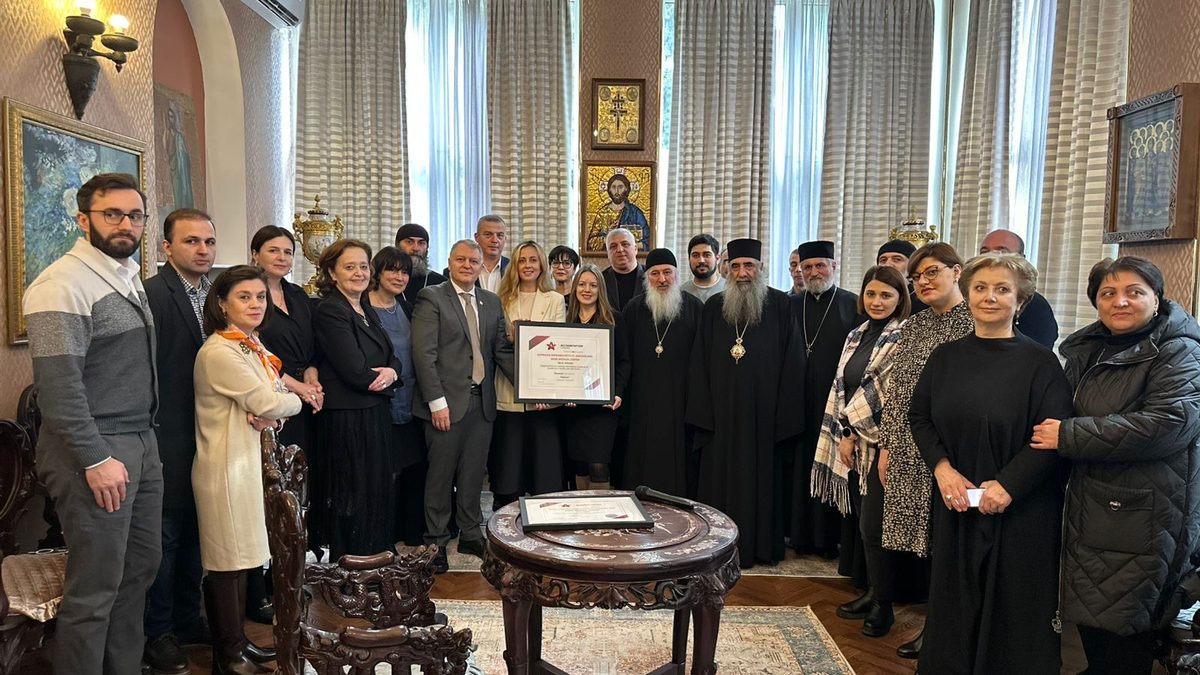
ASF has been operational for more than eight years, building and field-testing its approach in one of the world’s most dynamic transitional health systems — Georgia — before opening the model internationally.

We are governed independently of the facilities we accredit. Accreditation decisions are made by an accreditation committee on the basis of survey evidence alone. Our leadership brings decades of experience across WHO, international development, academic public health and hospital accreditation.

Our mission

“To make internationally credible healthcare accreditation achievable for every facility committed to quality — regardless of the maturity or resources of the health system it operates in.”

Headquarters

Paris — 32, Boulevard de Rochechouart, 75018
Geneva — 23 Rue des Eaux-Vives, 1207
Tbilisi — 3 Betlemi Rise, 0105
info@accreditation.ge


Our partners

Built with and alongside world-leading partners.

Public Health Institute of Georgia (PHIG)

National implementation partner in Georgia. An independent national institute and ASF’s Georgian anchor. PHIG is the official representative of Accreditation Canada in Georgia. publichealth.ge

Georgian Medical Journal (GMJ)

Academic publishing partner. Open-access, peer-reviewed, Crossref member (DOI prefix 10.66636, ISSN 3088-4322). Training delivered via the ASF Academy. gmj.ge

Accreditation Canada

International accreditation partner. Nine Georgian hospitals achieved Accreditation Canada certification through the PHIG partnership in 2023. accreditation.ca

International alignment

Aligned with global quality frameworks.

World Health Organization

ASF standards reference WHO frameworks, including patient safety and quality-of-care guidance, and the Refugee and Migrant Health Global Competency Standards. This does not imply WHO endorsement.

World Health Organization

ASF’s quality framework is aligned with WHO guidance on quality of care and patient safety, including the vision that quality health services are essential to universal health coverage. ASF leadership brings direct WHO experience, including WHO Geneva at P-grade level.

UEMS — European CME Benchmarking

ASF Verified training providers are benchmarked against UEMS and European CME standards. ASF leadership holds a senior role in the UEMS Section of Public Health.

Governance & independence

Accreditation decisions are made by an independent committee on the basis of survey evidence alone. Leadership holds no financial interest in any accredited or applicant facility. Fees are published and fixed, independent of outcome.

Write to ASF.

We reply in writing within 2 working days.

Contact

QR code
QR Code
Scan to open.
Print to share.
ShareFacebookLinkedInXWhatsApp
DocumentDownload QR

© 2026 Accréditation Sans Frontières · PHIG · Sheni Network