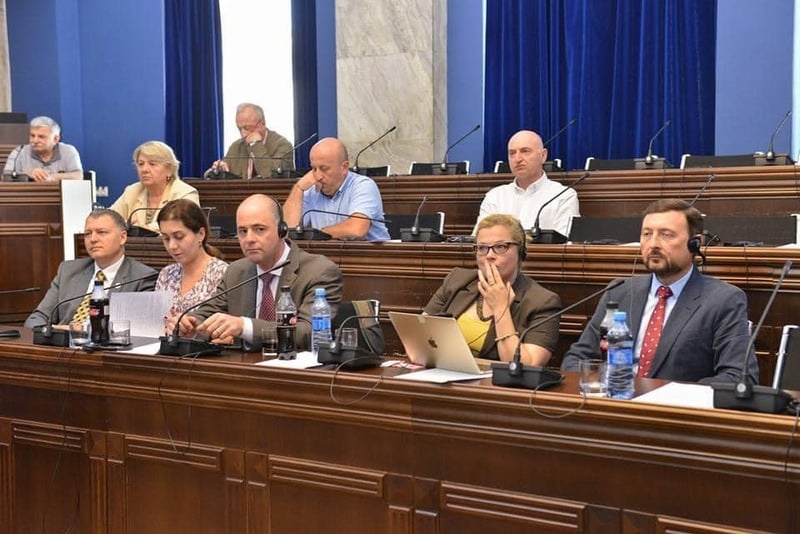
In 2014, a technical working group inside the Public Health Institute of Georgia (PHIG, founded 2011) made a decision that shaped the next decade of healthcare accreditation in the country: rather than build a Georgian accreditation body from scratch, PHIG would spend its early years convincing the country that accreditation belonged there at all. Its founders reasoned that Georgia’s hospitals did not need another local certificate nobody outside the country would recognize. They needed the real thing. PHIG’s technical group partnered with the country’s largest private healthcare provider and organized Georgia’s first missions by experts from a leading international accreditation body — the country’s first practical test of facility accreditation.
That door did not open by itself. Over the following years PHIG carried the argument directly into government — round after round of meetings with Georgia’s Ministry of Health, across successive ministries, making the case again each time leadership changed. By 2018 the advocacy had produced the first draft of an accreditation standard adapted to Georgian healthcare. In 2020 it produced something larger: the formal establishment of Accréditation Sans Frontières as an international legal entity in Paris, with its own standing technical authority, the ASF International Standards Council.
Between 2020 and 2022, PHIG, ASF and David Tvildiani Medical University united as the Accreditation Georgia Initiative. In 2021, 35 Georgian facilities applied to enter a pilot accreditation process against the adapted standard and 13 signed contracts; four were accredited — the first facility accreditations the country had ever recorded. In 2022 sustained engagement with the Ministry produced a government policy that Georgian hospitals should hold independent international accreditation, made law on 26 January 2023 through Order №4/ნ. PHIG’s role throughout was advocacy and education: bringing established international accreditation to Georgia, not competing with it.
The third edition of ASF’s standards, published in 2026, is the product of that history — shaped by consultation across countries and continents, reviewed by the International Standards Council on a three-year cycle, and published in full, in keeping with the principle that has guided this work since a handful of people in Tbilisi decided, in 2014, that Georgia’s hospitals deserved better than a standard invented just for them.
“Every woman, child and adolescent is entitled to quality healthcare. Independent accreditation of health facilities is not a luxury, but a vital tool to help them make the right decisions.”
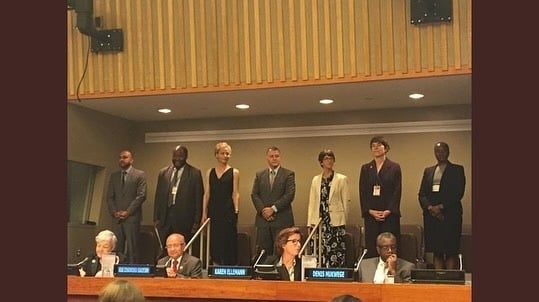
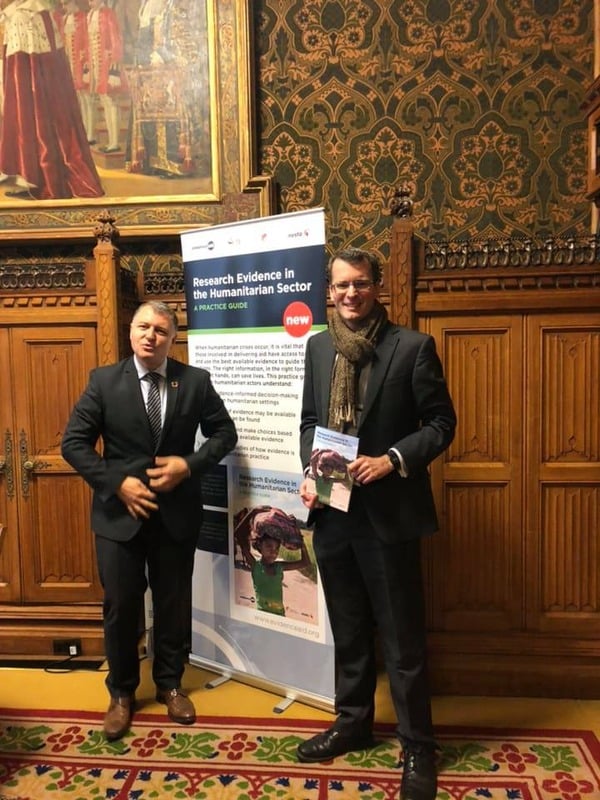
Each city does something different. The structure is a design choice: a standard informed by global evidence, refined through European technical rigour, and proven in the resource-constrained conditions where it was first built.
ASF’s work is organized the way the accreditation field itself is structured. The International Standards Council’s methodology draws on the World Health Organization’s guideline-development process, including the GRADE framework for weighing evidence certainty, adapted to the practical work of accreditation.
Board members and all ASF personnel are bound by the Code of Conduct. No Board member, the shared director, or ASF or PHIG as organizations hold any ownership, governance or procurement relationship with a facility that is or could become an ASF accreditation client.
| Legal form | Association d’intérêt général à but humanitaire et non lucratif, loi du 1er juillet 1901 |
| Declared | Préfecture de Police de Paris, 18 June 2020 |
| Journal Officiel | 27 June 2020, announcement n° 1340 |
| RNA | W751257030 |
| SIRET | 888 076 817 00012 |
| APE | 9499Z |
| Registered office | 32 Boulevard de Rochechouart, 75018 Paris, France |
| Telephone | +33 (0)7 53 90 22 63 |
| Legal form | Non-entrepreneurial (non-commercial) legal entity, Georgia |
| Registered | 9 September 2011 |
| Registration no. | 404407815 |
| Address | 3 Betlemi Rise, Tbilisi, Georgia |
| Relationship to ASF | Founding partner. ASF and PHIG share a Board and a director; both are independent non-governmental organizations. |
ASF’s founder also leads the Georgian Medical Journal, GMJ Academy, and a network of Georgian-language media sites. That overlap invites fair scrutiny, and ASF answers it in writing: no paid ASF service — training, publishing, membership support, consultancy — ever influences an accreditation decision, and the evaluation branch is operationally separate from the support branch. ASF was an Institutional Member of ISQua in 2023–2024 and follows ISQua’s principles as a reference; it has chosen not to seek ISQua external evaluation and says so. ASF is aligned with ISO/IEC 17011 in how it governs itself and does not issue ISO 9001 certificates.
Read the Independence & Non-Influence Statement → Everything ASF publishes about itself →
Accréditation Sans Frontières (Paris) and the Public Health Institute of Georgia (Tbilisi) are two independent non-profit organizations that operate as one, with a common board, management, vision and mission. Both promote independent healthcare accreditation and standards in emerging economies, fragile states and humanitarian settings, guided by medical ethics and the principles of impartiality, independence and neutrality — to improve the quality of care, protect patients and health workers, and improve how facilities perform. That is why the ASF standards carry the Crisis and Transitional categories: accreditation in a crisis zone or a fragile system is where trust, safe resource use and donor confidence are hardest to establish and most needed.
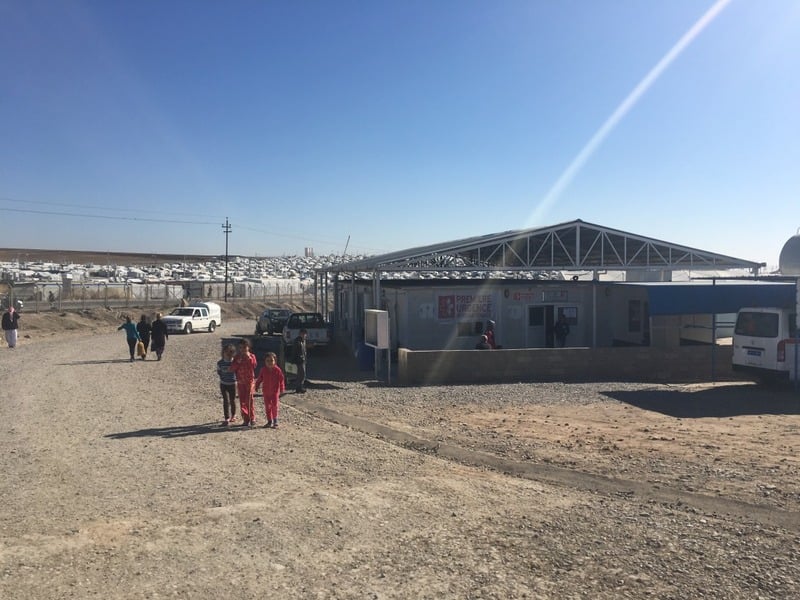
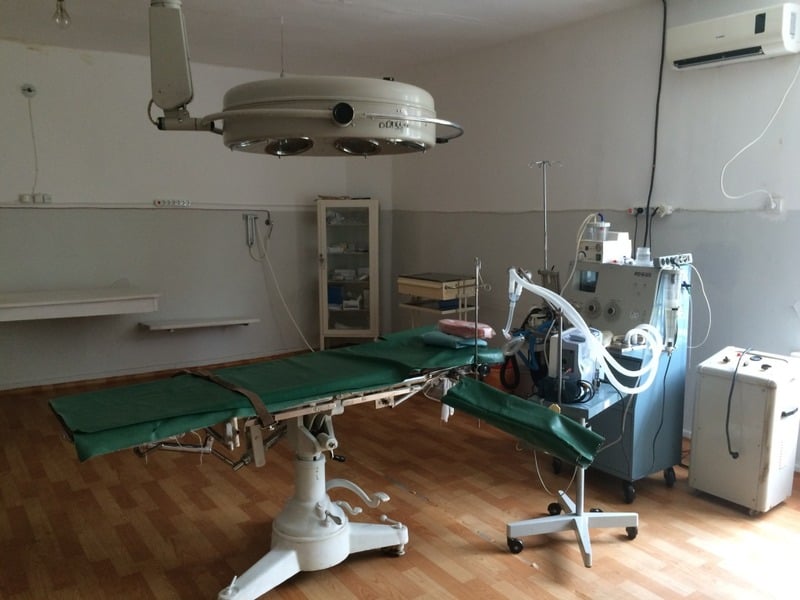
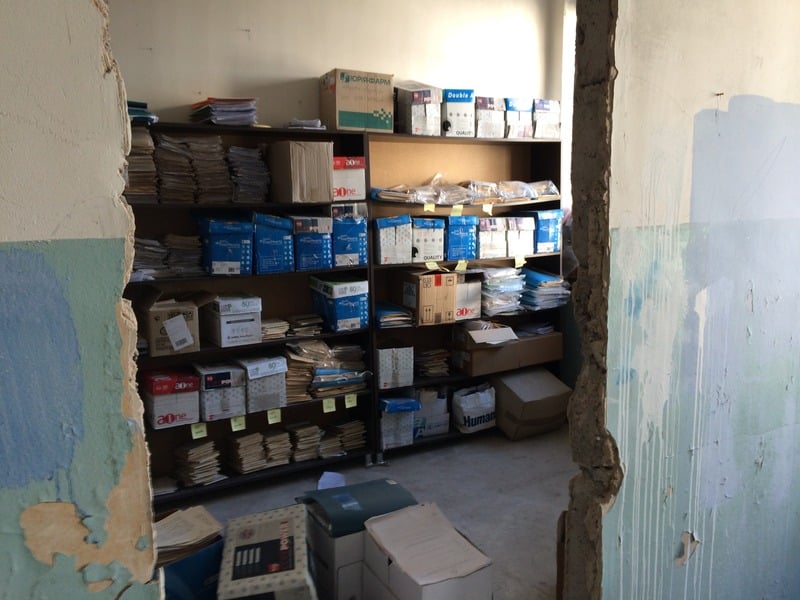
The alliance’s vision is that an ASF/PHIG-accredited facility is patient-centric — preferred for safety and quality; the physician’s choice — sought for service quality and for nurturing staff; and a community pillar — respected for affordable, responsible, effective accreditation, even in humanitarian settings. Its model is voluntary, scientifically supported, aligned with European standards as a reference, and delivered by a selected team of national and international experts. Alongside accreditation, the alliance runs the Patient and Family Council initiative, the Georgian Medical Journal, the Sheni public-health media network, the Safe Supplement Georgia initiative, and a fitness-standards programme with Georgia Active — each disclosed here because the overlap invites scrutiny.
Every ASF standard is published in full and free to reuse. Any organization building accreditation in its own country is welcome to ASF's knowledge and support.