

The Accreditation Model
A complete, transparent, replicable quality improvement framework for healthcare facilities at any income level, in any country, in any language.
Read: The ASF Standard — the unified architecture behind these modules →
The Three-Layer Architecture
The ASF model is built in three progressive layers. Each layer is complete in itself — a facility can stop at any layer and retain full value. Most facilities progress through all three over 12–24 months.
| Layer | Who | What it provides |
|---|---|---|
| 1 — Knowledge | Anyone, anywhere | Free self-assessment for all facility types. Full standards. Full gap report. Works offline. No account. No commitment. Six languages. |
| 2 — Improvement | Registered facility | Facility account. Named roles. Quarterly cycle. Certified Coordinator and Monitor. Evidence-linked. Progress tracked permanently. |
| 3 — Recognition | Certified or accredited facility | Independent ADC decision. Certificate issued. Public registry. QR verification. Annual renewal. Permanently protected. |
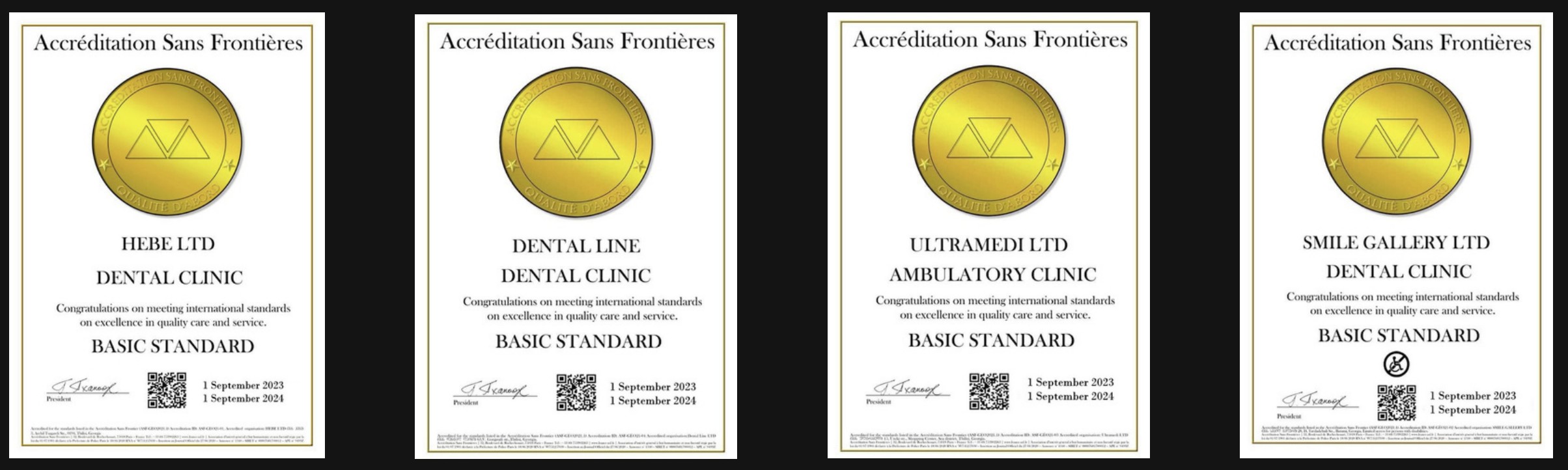
The first four Georgian healthcare facilities to receive international accreditation in the country’s history — ASF Basic Standard, 2023

Accreditation Canada certificate presentation, Georgia, 2023 — PHIG as official national representative
The Two Pathways
ASF offers two formally distinct recognition pathways. They share the same standards and the same quality assurance system. The difference is in decision-making authority and threshold.
| ASF Certification | ASF Accreditation | |
|---|---|---|
| Purpose | Entry pathway, local recognition | Full international recognition |
| Requires | Local NAP partner in country | ASF registration only |
| Thresholds | 100% Non-Negotiable + ≥70% Core | 100% Non-Negotiable + ≥85% Core + ≥70% Standard |
| Decision body | Local NAP (authorised by ASF) | ASF Accreditation Decision Committee |
| Timeline | Weeks to months | 12–24 months |
| Annual fee | See Fees | See Fees |
| Badge | Silver — ASF Certified | Gold — ASF Accredited |
How the Cycle Works
Register & Name Four Roles
Director, Responsible Person, Coordinator (ASF-certified), Monitor (ASF-certified). Delegation of Authority signed.
Complete Q1 Full Self-Assessment
Every criterion answered. Every YES backed by a mandatory evidence declaration. Improvement Plan produced automatically from gaps.
Annual Virtual Milestone Review
Once a year, remote document review + video call against the cumulative quarterly record. No travel. ~2–3 hours.
Q2, Q3 & Q4 Self-Assessment Updates
Carry-forward default — Coordinator updates only what changed, every quarter, across the 3-year cycle.
Full Verification & 3-Year Renewal Visit
At the close of the 3-year cycle, the Monitor fully verifies 100% of criteria, then an ASF supervisor confirms and spot-checks. Patient journey walk-through. Staff interviews. Provisional decision same day.
ADC Decision & Certificate
Independent committee reviews supervisor recommendation. Accredited / Conditional / Deferred / Not Accredited. Certificate issued with QR code. Public registry updated.
Explore the Model
The Quarterly Cycle
The 3-Year Renewal Visit
Accreditation Decision Committee
Quality Assurance of the System
Theory of Change
Frequently Asked Questions
ASF–ISO Crosswalk