Local Adaptation and the NAP Model
ASF is the only international accreditation body designed from the ground up to become locally owned in every market it enters.
Why Language Matters More Than Fee Structure
When a Georgian nurse is assessed against a criterion written in English for an American hospital context, enforced by an international surveyor who does not know Georgian healthcare law or Georgian clinical education — that is not rigorous assessment. That is cultural imposition dressed as quality improvement.
Permanent commitment: “ASF accreditation and certification are conducted in the primary language of healthcare practice in the country of the facility being assessed. No facility shall be disadvantaged by a language that is not its primary language of clinical practice.” See the Language and Translation Policy.
The Three-Layer Standard
| Layer | What it is | Can it change locally? |
|---|---|---|
| Layer A — Universal Core | Patient rights, basic safety, infection prevention, emergency preparedness. Same everywhere. | No. Translated, not adapted. Cannot be weakened. |
| Layer B — Adaptable Framework | The criterion is universal. The evidence of compliance is locally defined. | Yes — the NAP defines what evidence looks like in the local context. |
| Layer C — Local Regulation Module | Country-specific addendum mapping national healthcare legislation onto ASF criteria. | Yes — produced by the NAP. Higher of local law or ASF governs. |
National Adaptation Partners (NAPs)
Local organisations that localise standards, train local professionals, issue certifications, and provide local support. ASF does not require physical presence in any country once a NAP is established.
| NAP does | NAP does not |
|---|---|
| Translate and localise all standards, tool, and training in the national language | Change Layer A criteria |
| Produce the country’s Local Regulation Module | Issue ASF Accreditations — only ASF Certifications |
| Train and certify local Coordinators and Monitors | Sit on the ADC or influence ADC decisions |
| Issue ASF Certifications with co-branded badge | Set fees above the published ASF ceiling for their tier |
| Provide local support in the national language | Operate outside ASF’s quality assurance system |
Who Can Become a NAP
- National public health institutes
- Medical or nursing professional associations
- University schools of public health or medicine
- Established national quality bodies seeking an international framework
- NGOs with demonstrated facility quality experience
A NAP must be a legally established organisation with a track record in healthcare quality, the capacity to deliver training in the national language, and financial independence from the facilities it will certify. ASF quality-assures every NAP through annual review and random re-verification of NAP-certified facilities.
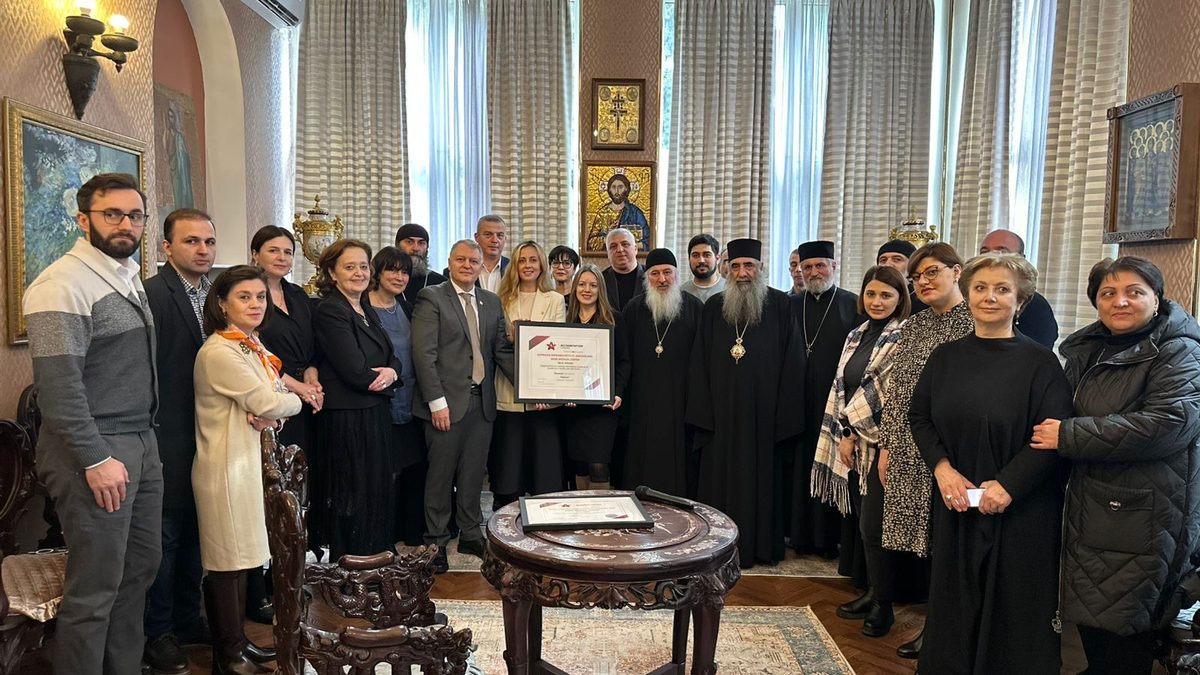
Georgia — The Live Model
NAP partner: PHIG
Public Health Institute of Georgia. Programme: SheniEkimi Certification at certificate.ge. All training, support, and communication in Georgian. Financially self-sustaining through certification fees since 2021.
Your country next?
ASF is actively seeking NAP partners in every region. Write to us with your organisation’s profile, your country’s healthcare regulatory context, and your capacity to deliver training.