
Training Requirements
17 specific skills the standard depends on, each with a real reason it’s needed, a code, and a delivery route. This is the build list for GMJ Academy, not an abstract wish — every code below is already wired into the self-assessment tool and the Standard itself.
Why a standard needs a training list at all: a written criterion only changes what happens at a facility if the person responsible actually has the skill behind it. “Staff know CPR” on paper and a staff member who can genuinely perform compressions correctly under pressure are not the same thing — the gap between them is exactly what training closes. Every code below exists because a specific criterion on the standard depends on a specific, real, demonstrable skill, not because training sounds good to list.
Two delivery routes, deliberately: online through GMJ Academy for anything that can genuinely be verified remotely — knowledge-based content where a written or video-based assessment proves understanding. In-person through an ASF-recognised local provider for anything requiring hands-on physical skill a screen cannot verify — Basic Life Support above all. Mixing these up would make the weaker route the actual standard; keeping them separate keeps both honest.
Standard 1 — Water Safety

3 codes
Online — GMJ Academy
Why this training is needed: Water Safety criteria 1.2 and 1.7 both depend on a named person understanding what “safe” actually means in testable terms — acceptable chemical and bacteriological ranges, test frequency, and how to read and file a lab result correctly. Without this, “testing happens” becomes a box ticked by someone who doesn’t know what a passing result looks like.
Satisfies criteria: 1.2 (testing/records), 1.7 (staff training)
Online — GMJ Academy
Why this training is needed: Pool chemistry shifts within hours of use, not days — chlorine and pH testing is a genuinely distinct skill from general water-source testing, with its own acceptable ranges (per WHO’s dedicated recreational water guidance) and its own daily testing discipline. A facility with a pool needs this specifically, separate from TGM-WATER-01.
Satisfies criteria: 1.5 (pool water testing); Facility Standards Pool.1
Online — GMJ Academy
Why this training is needed: This single course has to teach two temperature rules that sound contradictory unless properly explained together — the tank must run hot enough to prevent Legionella growth (per WHO’s Legionella guidance), while the water reaching the guest’s skin must be cooled to a safe maximum via a thermostatic mixing valve (criteria 1.8 and 1.9). Someone who only understands one half of this will get the other half wrong.
Satisfies criteria: 1.8 (Legionella prevention), 1.9 (scald prevention)
Standard 2 — Food & Dining Hygiene

3 codes
Online — GMJ Academy
Why this training is needed: The Gateway’s compulsory cold-chain and raw/cooked separation requirements — the two leading real-world causes of food poisoning per the Codex Alimentarius — only hold up in practice if kitchen staff understand the danger zone (5-60°C), cross-contamination routes, and basic hand hygiene timing as working knowledge, not memorised rules.
Satisfies criteria: 2.1 (training), 2.2 (storage), 2.3 (hand hygiene); contributes to Gateway items 5-6
Online — GMJ Academy
Why this training is needed: Ice machines are genuinely counter-intuitive — staff who clean visible surfaces thoroughly routinely skip the ice bin entirely, because ice looks clean. This short, specific module exists because general kitchen-hygiene training doesn’t naturally cover equipment that sanitation inspectors treat as food-contact surfaces but staff instinctively don’t.
Satisfies criteria: 1.10 (ice machine sanitisation)
Online — GMJ Academy
Why this training is needed: A severe allergic reaction is a fast-moving medical emergency, and the failure point is almost never the kitchen’s ability to accommodate a request — it’s the chain of communication from guest to server to kitchen breaking somewhere along the way. This module teaches the process, not just ingredient knowledge.
Satisfies criteria: 2.5 (allergy process)
Standard 3 — Pest & Vermin Control

3 codes
Online — GMJ Academy
Why this training is needed: Integrated Pest Management is fundamentally a prevention discipline — recognising early warning signs before an infestation is visible — which is a different mindset from reactive “call someone when you see something.” Staff who understand IPM principles catch problems weeks earlier.
Satisfies criteria: 3.1, 3.2, 3.3, 3.5
Online — GMJ Academy
Why this training is needed: Bed bugs are one of the most reputation-destroying incidents in hospitality precisely because untrained staff respond wrong — cleaning a room and rebooking it immediately is the single most common mistake, and it’s how one incident becomes an infestation. This module exists specifically to correct that instinct.
Satisfies criteria: 3.8 (prevention), 3.9 (response), 3.10 (learning)
Online — GMJ Academy
Why this training is needed: Genuinely conditional — only relevant to rural, safari, and ground-floor properties — but where it applies, an untrained staff reaction to a snake or other dangerous animal sighting can turn a containable situation into an injury. This is a short, location-specific module, not a universal requirement.
Satisfies criteria: 3.11 (dangerous wildlife)
Standard 4 — Fire & Emergency Safety
2 codes
Online theory + recommended annual in-person drill
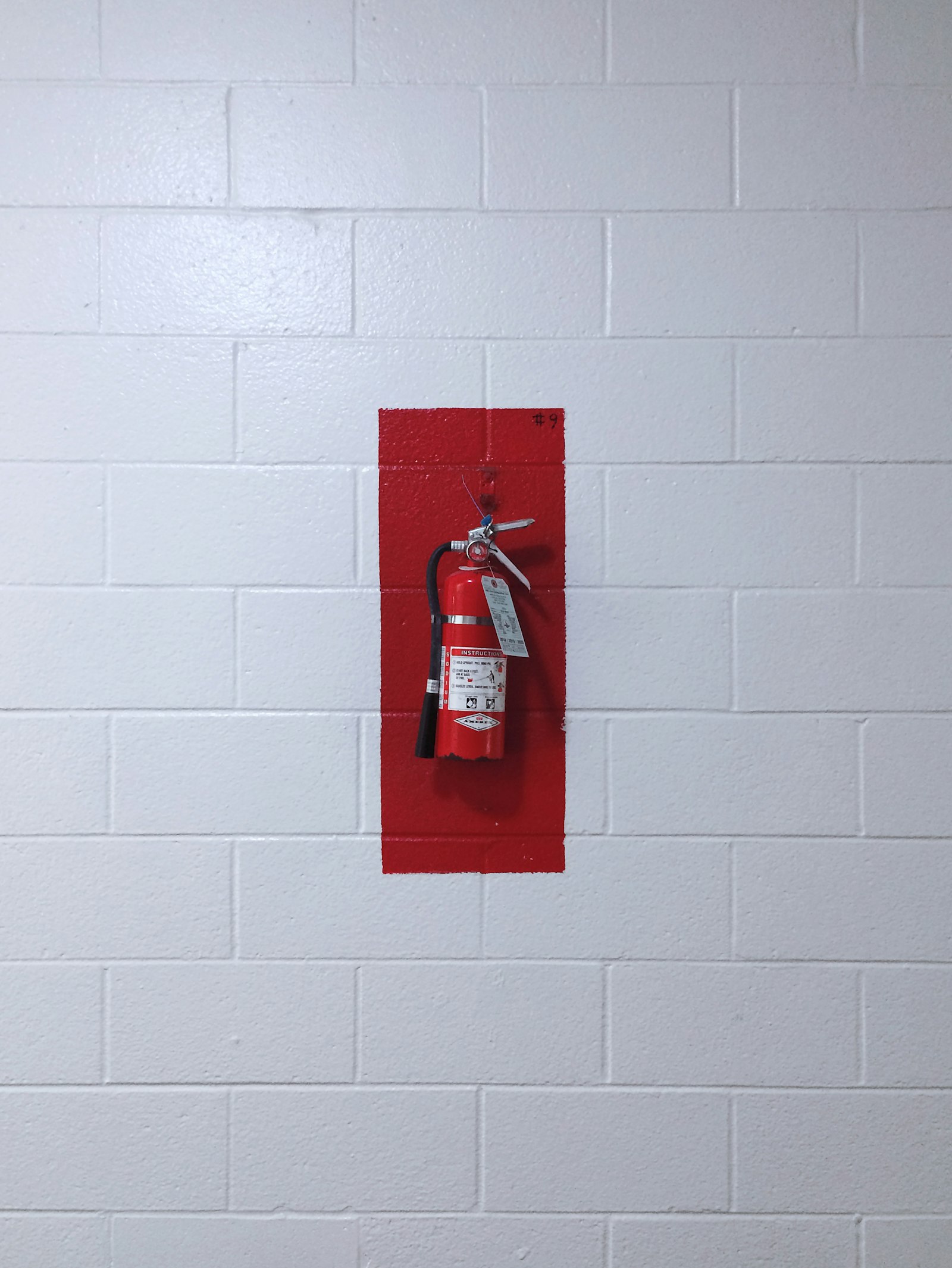
Why this training is needed: Equipment and marked exits only work if staff can actually use them under real pressure, with panicked guests to guide. Knowing an extinguisher exists is not the same as knowing how to use one in the first 90 seconds of a real fire. NFPA 101 treats staff fire training as a core operational requirement, not an induction formality.
Satisfies criteria: 4.1, 4.2, 4.3, 4.4
Online — GMJ Academy
Why this training is needed: CO is invisible and odourless, and almost no country currently requires detection by law — meaning staff awareness genuinely cannot be assumed as general knowledge the way fire awareness can. This short module exists to close a real, documented gap: recognising symptoms, knowing detector placement logic, and knowing the response if an alarm sounds.
Satisfies criteria: 4.7 (CO detectors); Facility Standards Pool.5
Standard 5 — Medical Emergency Response
2 codes — includes the single most important training on this entire list
Online — GMJ Academy
Why this training is needed: Most small properties have never actually written down what happens if a guest has a cardiac event or a bad fall at 2am — this module walks a facility through building that specific written protocol, naming the real nearest hospital, and confirming a genuine transport method, rather than leaving it to improvisation in the moment.
Satisfies criteria: 5.3, 5.4, 5.5
IN-PERSON ONLY — no exception
Why this training is needed: BLS — CPR, choking response, and recovery position — is the one skill set on this entire standard that genuinely determines whether a guest survives the first few minutes of a cardiac arrest, minutes that pass long before any ambulance can realistically arrive anywhere. Because it requires hands-on physical practice (correct compression depth and rate, airway positioning) that a screen cannot verify, ILCOR’s international resuscitation guidelines — the basis for virtually every national BLS certification program — require in-person skills assessment without exception. This is also the direct reason ASF needs recognised local training partners, not just GMJ Academy: no online course can honestly certify this skill.
Satisfies criteria: 5.6 — Essentials-tagged, required at all times (day and night shifts both)
Standard 6 — General Hygiene & Cleaning

2 codes
Online — GMJ Academy
Why this training is needed: Cleaning quality varies enormously between properties with no written standard — this module, adapted from WHO facility-level infection prevention guidance, converts “clean the room” into a consistent, repeatable sequence that survives staff turnover rather than depending on each individual housekeeper’s personal habits.
Satisfies criteria: 6.1, 6.3, 6.4, 6.6
Online — GMJ Academy
Why this training is needed: Maintenance staff typically think about HVAC and electrical systems in terms of comfort and function, not infection or electrocution risk — this module reframes routine maintenance decisions (service intervals, ground-fault protection) explicitly in terms of the real guest-safety stakes behind them.
Satisfies criteria: 6.7, 6.8, 6.10
Standards 8-11 & Facility Modules
5 codes — Accessibility, Management, Fall Prevention, Allergen Safety, and conditional facility skills
Online — GMJ Academy
Why this training is needed: This is deliberately the lowest-cost, highest-reach item in the whole standard — even a property with genuine, unavoidable structural limitations can fully meet the staff-awareness criteria. Disability advocacy organisations consistently find staff attitude and competence matters more to the actual guest experience than infrastructure alone. The module also specifically connects accessibility to emergency evacuation planning, per UN CRPD Article 11, since a deaf guest cannot rely on an audible alarm and a wheelchair user cannot rely on a stairwell.
Satisfies criteria: 8.1, 8.4, 8.5
Online — GMJ Academy
Why this training is needed: Running the central incident log, scheduling refresher training, and reviewing practices internally are management-system skills, not safety-technical ones — this module teaches the ISO 9001-aligned discipline of continuous review that keeps every other criterion on this standard from quietly lapsing after the assessor leaves.
Satisfies criteria: 9.2, 9.3, 9.6
Online — GMJ Academy
Why this training is needed: Slip-and-fall is documented as the single highest-frequency guest liability claim type at hotels. This module teaches housekeeping and maintenance staff to actively look for fall risk as part of their routine — non-slip surfaces, grab bars, level-change marking — rather than treating these as one-time installations nobody revisits.
Satisfies criteria: 10.1, 10.2, 10.3, 10.5
Online — GMJ Academy
Why this training is needed: NIH data finds roughly 1 in 2 people sensitive to at least one allergen — this module teaches housekeeping staff why barrier-type mattress protectors specifically (not just general cleaning) are the proven intervention against dust mite exposure, and how to respond confidently when a guest requests a fragrance-free amenity.
Satisfies criteria: 11.1, 11.2, 11.3, 11.4
Online — GMJ Academy
Why this training is needed: Genuinely conditional on location — relevant to safari, rural, and wildlife-adjacent properties specifically — teaching staff to deliver a consistent, useful safety briefing at check-in rather than an improvised, inconsistent one.
Satisfies criteria: 7.3
Become a recognised local training provider
TGM-MED-02 (BLS) needs a real, local, in-person trainer — ASF cannot deliver that itself, and shouldn’t try to. Organisations already qualified to teach BLS, or to run the recommended annual in-person fire drill alongside TGM-FIRE-01, can apply to become an ASF-recognised training provider for their country. Recognised status means a facility can point to your course as satisfying the matching criterion directly.
Interested organisations: email info@accreditation.ge. Nothing is finalised yet — this is the proposal stage, and early applicants help shape how recognition actually works.