
ASF Tourism
Frequently Asked Questions
Honest answers to everything we could think of — including “has this actually started yet.”
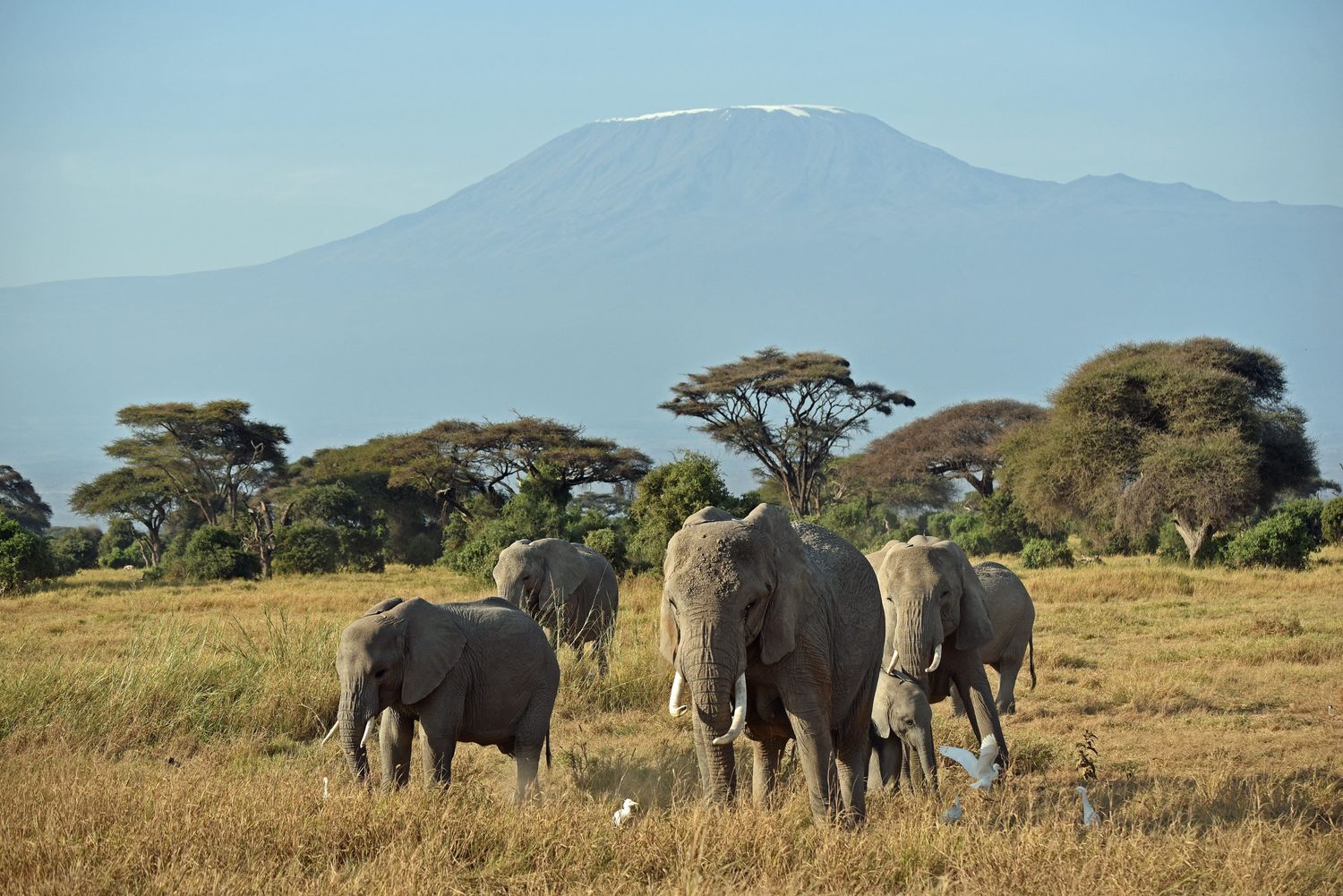
Photo: Amboseli National Park, courtesy of Africa Calling Safaris
Has this actually started? Is any facility verified yet?
No. This is a new initiative. The draft standard and process are built and published; no facility has been assessed, no partner organisation has signed on, and no pilot has run anywhere yet. Every page in this section says so plainly, and this one is no exception.
We’re already classified by our national tourism authority. Why would we need this too?
National classification (star ratings, bronze/silver/gold schemes) measures quality and comfort — things like room size, amenities, and service level. It generally does not independently verify water safety, food hygiene, pest control, or fire safety with on-site evidence. ASF Tourism is built to sit alongside that classification, not replace it, covering the specific ground it doesn’t — and it’s the specific ground travellers say they actually check: 79% say it matters that a property can publicly show it meets government-recognised safety standards, which a star rating alone doesn’t demonstrate.
Is this mandatory?
No. ASF Tourism is a voluntary programme, the same way ASF’s healthcare accreditation is voluntary. Local legal licensing and safety requirements always come first and are never replaced by this.
If it’s voluntary, why would a facility actually bother?
Because the demand is already there, whether or not a facility opts in. 87% of travellers carry travel safety concerns; 92% call cleanliness the single most important factor in choosing where to stay; and measured booking behaviour shows 79–84% choose a certified property over an uncertified one even when it costs more or is rated higher. A facility doesn’t need to be told this is important by ASF — its own guests are already screening for it. Certification is simply the independent way to prove it, rather than just claiming it in marketing copy. The full research is on the Why ASF Tourism page.
WTTC’s Safe Travels stamp is self-assessed — a facility fills in a form. GSTC’s own Hotel Standard states explicitly that health, safety, and security are outside its scope. Ecotourism Kenya’s Eco-rating is a genuine, independent scheme, but its focus is environmental and socio-cultural performance, not safety. ASF Tourism is the one built specifically, and independently, around health and safety verification.
How does ASF make sure its own assessors stay impartial?
A written conflict-of-interest declaration before every assignment, a severity-review process for anything declared, and no assessor’s pay ever tied to whether a specific facility passes. The full detail is published at Governance & Policies — the same structural separation ASF already runs for its healthcare accreditation work, adapted here.
Can we just do the free self-assessment without committing to anything?
Yes. The self-assessment is free, requires no account, and carries no obligation to go any further. Plenty of facilities may use it just to see where they stand.
What happens if a facility doesn’t pass the on-site visit?
Because the pre-assessment roadmap happens before the on-site visit, most gaps should already be known and addressed by the time the verifier arrives. Where something is still missing, the expected outcome — consistent with how ASF’s healthcare accreditation works — is a specific corrective action and a path back to re-assessment, not simply a closed door.
Who actually does the on-site verification?
This is one of the open questions the local-partner model is built to answer — verifiers would likely be trained either directly by ASF or by the local partner organisation under ASF’s methodology, the same way ASF trains Coordinators and Monitors in healthcare. Nothing is finalised yet.
We’re a very small property — five rooms, family-run. Is this really for us?
Yes, deliberately. The smallest membership tier and the free training model exist specifically so a small, resource-limited property isn’t priced out the way research shows has happened with comparable schemes elsewhere.
Is our self-assessment data kept private?
A facility’s self-assessment answers are its own and are not intended to be published. What ASF does publish, once a facility is actually verified, is the outcome and the registry listing — not the internal self-assessment responses themselves.
We already have a Green Globe or GSTC certificate. Do we have to redo that work for ASF?
No. Wherever a recognised national authority or credible international certification body has already certified something — a fire safety certificate, a water test, a Green Globe or GSTC sustainability certificate — ASF accepts it directly as evidence. Submit it, and that item is done. ASF’s role is to check what nobody has checked yet, not to repeat work someone else already did properly.
What’s the difference between the “Essentials” and “Full Standard” tracks, and which one applies to us?
Essentials (28 criteria — one or two per category, at most) keeps only the single most critical item in each section and drops the formal documentation-system requirements — logged schedules, written management reviews — that make sense for a large hotel with shift staff but not for a small, owner-operated property. Full Standard (80 criteria) is the complete set, recommended for larger properties with the staff and systems to run it. Roughly: under 20 rooms, Essentials is likely the right fit; above that, Full Standard. Either way, the self-assessment tool has a filter to show you only the track that applies.
Why does a safety standard cover things like bed bugs and accessibility — isn’t that outside the scope?
Both are genuinely health and safety issues, not scope creep — see the Evidence Base for the real data behind every item on this standard. Bed bugs are one of the most common, reputation-destroying incidents in hospitality, and the standard checks prevention and response, not just “has this ever happened” — a property can’t be penalised for something a guest brought in from elsewhere if it handled the incident properly. Accessibility is scoped narrowly and realistically: one accessible room, one bathroom, one common area, where a facility’s physical layout allows it — not whole-building compliance.
If a guest gets food poisoning or has a medical emergency, does ASF take responsibility?
No. ASF verifies that a facility’s practices and protocols meet the standard — it does not operate the facility, treat guests, or assume liability for what happens there. What the standard does require is that a real medical emergency protocol exists, with a named nearest hospital and a real evacuation method, and that food safety’s two leading risk factors (cold chain, raw/cooked separation) are compulsory, not optional. The goal is a facility genuinely prepared for these situations, not a transfer of legal responsibility to ASF.
How much does this actually cost, and why is it priced per room?
A monthly membership, tiered by room count — the actual amount is developed individually for each country, together with the local partner, reflecting that country’s own market conditions, so it isn’t published here. Per-room pricing exists because a 5-room guesthouse and a 150-room hotel are different businesses and shouldn’t pay the same fee. The membership includes unlimited staff training, the self-assessment tool, the roadmap, and the on-site visit itself — see the Membership page for the full structure. As for whether it’s worth it: 79–84% of travellers already choose a certified property over an uncertified one, even one that costs more, so the membership is buying proof most competitors still can’t offer, not just a certificate for the wall.
Could ASF eventually cover sustainability or environmental certification too?
Possibly, in future, and only where a local partner actually wants that broader scope — never built into the mandatory core, and never a shortcut. If it happens, it would work exactly like the health and safety standard does now: a real certificate (Green Globe, GSTC) accepted directly, or ASF’s own direct verification where no certificate exists. ASF is not becoming Green Globe or GSTC and does not issue their certifications — this is about a possible future option, not a current offering.
Why these six countries specifically — what if our facility isn’t in one of them?
Kenya, Tanzania, Uganda, Georgia, Moldova, and Turkey are where ASF has identified a strong candidate local partner organisation worth naming — not an exclusive list, and not a sign that any of them have agreed to anything. The standard and process are built to work the same way in any country, including ones not listed yet. If your facility is elsewhere, the honest answer is that ASF Tourism doesn’t have a path to you yet — but the email below is exactly how that could change.
What’s the actual timeline — when could a facility realistically get certified?
Honestly: not yet, because no local partner has been confirmed anywhere. Once a partner is in place, the sequence is free self-assessment, a pre-assessment roadmap, training and preparation at the facility’s own pace, then a half-day-to-one-day on-site visit. There’s no fixed timeline being promised beyond that, because it depends on a real partnership existing first.
Who actually decides if a facility passes — is it the same person who visited?
No, and that separation is deliberate. The verifier who visits reports evidence; a separate decision step reviews that evidence and issues the outcome. This mirrors exactly how ASF’s healthcare accreditation already works — the person who checks a facility is never the same person who decides its fate, which is what makes the result mean something.
What happens after certification — is it a one-time thing?
No. Certification is valid for three years, not indefinitely, with a light annual check-in in between — a short self-report, not a repeat of the full process. Quality is treated as something that has to be maintained, not a badge earned once and forgotten. Full re-verification happens every three years.
We’re in Kenya, Rwanda, Tanzania, Uganda, Moldova, or Turkey — does our government licence count for anything?
Possibly, for specific items. The Recognized National Standards page lists, country by country, which real government certificates are already accepted as a complete means of verification for the matching ASF criteria — a Kenyan TRA licence, a Rwandan Tourism Operating Licence, and others. If your country or certificate isn’t listed yet, ASF’s own self-assessment and verification process covers it directly instead.
How do I know this standard isn’t just made up — where’s the actual evidence?
Every criterion has a reason, and the reasons are published separately rather than buried in the standard itself — see the Evidence Base. Some items cite hard incident data (carbon monoxide deaths, scalding injuries, electrocution statistics); others rest on established guidance (WHO, Codex Alimentarius, 9001) rather than a specific body count. Both kinds are labelled honestly as what they are — nothing is dressed up as more rigorous than it actually is.
Why do some criteria cite real incidents and others just reference general guidelines?
Because that’s genuinely how the evidence breaks down. Some risks (carbon monoxide, scalding, bathroom electrocution, balcony railing failure) have documented deaths, injuries, and even active legislation behind them. Others (routine cleaning, staff training logs) are good practice without a specific tragedy attached to them. Claiming equal evidence for both would be dishonest — the Evidence Base keeps that distinction visible rather than smoothing it over.
Our country isn’t Kenya, Georgia, Moldova, Rwanda, Tanzania, Turkey, or Uganda — is there anything here for us?
The standard and self-assessment tool work the same way regardless of country. What’s country-specific right now is the Recognized National Standards page — which government certificates are accepted directly as evidence. That page currently covers seven countries and is explicitly a starting point, not a final list. If your country isn’t there yet, the self-assessment and Standard still apply; you’d simply provide a photo or document as your means of verification instead of relying on a pre-listed certificate.
What’s the difference between this FAQ, the Evidence Base, and the Recognized National Standards page?
Three different jobs. This FAQ answers practical questions about how the programme works. The Evidence Base answers why each specific criterion exists, with citations. Recognized National Standards answers which real government certificates already satisfy parts of the standard, country by country. All three link to each other rather than repeating the same content three times.
Can I see a real example of an incident that led to a specific criterion?
Yes — this is deliberately not hidden. The carbon monoxide detector requirement cites documented 2024–2025 hotel deaths and active U.S. Congressional legislation. The scalding-temperature limit cites a 2024 hotel death in California. The ground-fault protection requirement was added after a real, personally reported bathroom electrocution. The balcony railing requirement cites a 2024 railing collapse in Mexico that killed two people. Full details, with sources, are on the Evidence Base page, organised by section.
Carbon monoxide detectors, electrocution protection, scald temperature limits — isn’t this a lot for a tourism standard?
Each one is on the standard because it’s a real, documented cause of hotel guest death — not a theoretical addition. See the Evidence Base for the specific incidents, statistics, and citations behind every item, including these. Nothing was added without a real reason attached to it.
Our facility has a pool, spa, gym, and bar. Do we need to do anything different?
Yes — the Standard includes a “Facility Standards” section with short, conditional modules for exactly these (plus elevators and kids’ clubs). Each one only applies if you actually have that amenity — a guesthouse with none of them does none of this extra work. The self-assessment tool lets you check off only what applies to you.
Where do specific numbers like “120°F” or “1 metre railing height” come from? Are they arbitrary?
No — each one traces to a real source. 120°F/49°C is the long-standing U.S. plumbing-code scald limit, adopted voluntarily by water heater manufacturers since the 1980s. The 1-metre railing figure and the 125mm child-head-entrapment gap rule both come from widely used international building codes. The Evidence Base cites the specific source for every number like this on the standard.
I want to understand exactly why one specific requirement exists. Where do I look?
Start on the Standard page itself — each section has a “Why this item?” link leading straight to its entry on the Evidence Base, organised in the same order as the standard so it’s easy to find the specific criterion you’re asking about.
What if our country already requires something close to one of these items — like a vermin-proofing contract or an electrical safety certificate?
Check the Recognized National Standards page first. If your government already issues a real certificate covering a given item — several of the countries listed there do, including requirements that map closely onto specific ASF criteria — upload it as your means of verification and that item is done, no re-checking required.
A real 50-room hotel wants to start tomorrow. Are you ready — what actually happens?
Honestly, in stages. Available right now: the free self-assessment and the full draft standard — the property can start today, see exactly where it stands, and get a PDF snapshot. Not yet available: a real on-site verification visit and an actual certificate, because no local partner organisation has been confirmed in any of the six target countries yet. A real 50-room property today would get genuine value from the self-assessment and roadmap thinking, plus an honest answer that the verification step is still being built — and a direct line to shape it, since an early, real applicant is exactly the kind of input this draft needs before it’s finalised.
How do we get involved, or ask a question not covered here?
Email info@accreditation.ge. This programme is still at the proposal and partner-search stage, so an early question is genuinely useful — it can still shape the standard and process before anything is finalised.