
ASF Tourism
Independent health and safety verification for tourist accommodation and hospitality facilities — the same model that built trust in healthcare, now built for the facilities that welcome the world.
Or read first, if you prefer:
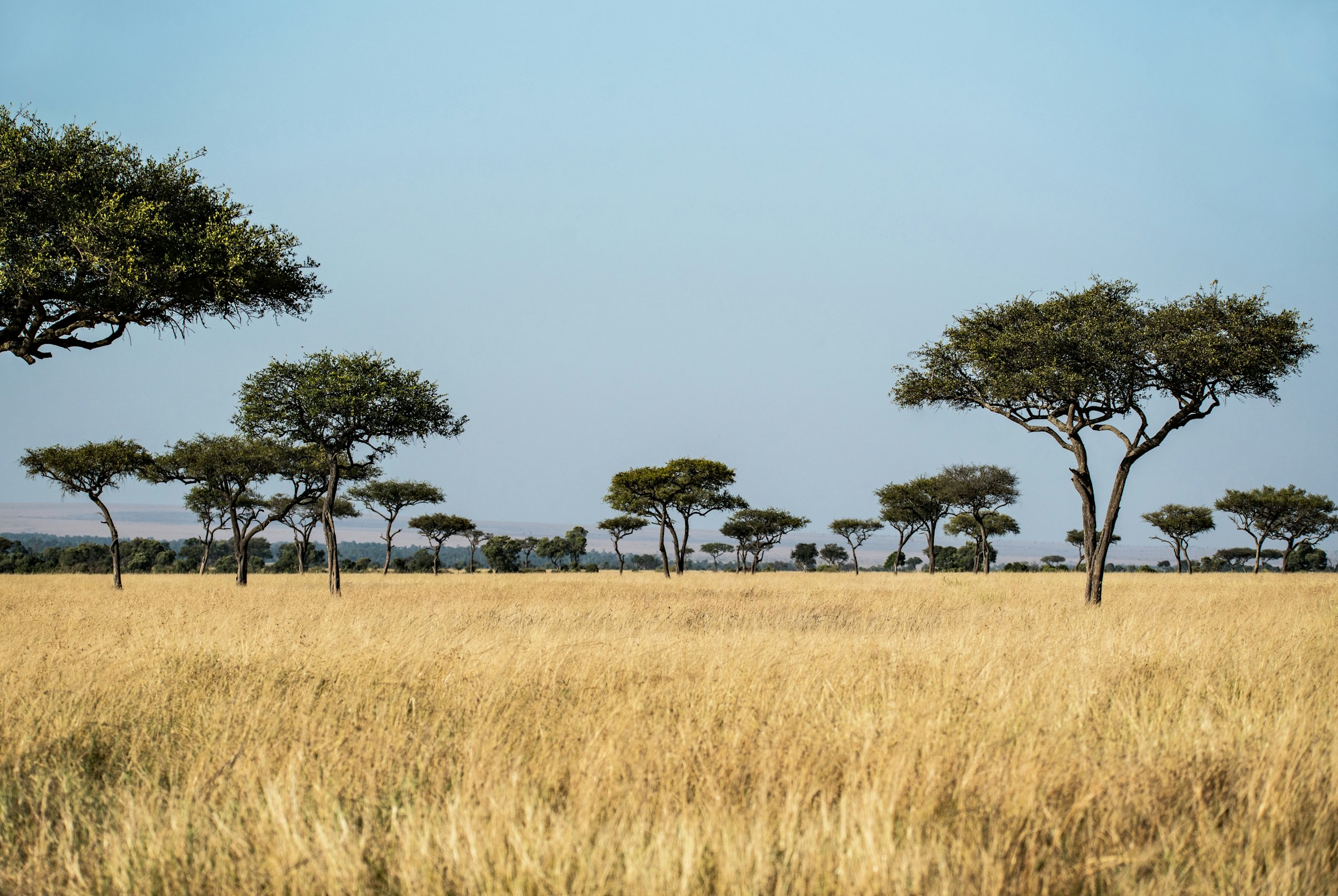
If you run a hotel, lodge, or tour operation, your guests already told you what they want
Three things are true at once, and none of the 200+ existing certification schemes are built to hold them together: the industry is growing faster than the rest of the global economy, governments are putting real money behind that growth, and travellers themselves say cleanliness and verified safety — not price or star rating — are what actually decide where they book. For a business, that isn’t background noise. It’s the single clearest piece of market research available to you, and it’s free to read below.
Why this matters if you’re a business, not a tourist: this demand is not a theory and it is not going away — it is a growing, specific majority of your prospective guests, and most of your competitors have no independent way to prove they meet it. Certification is how a facility proves its safety and hygiene before a booking decision is made, not after a bad review. The facilities that can prove it first get to say so first.
Governments are betting on the same demand — East Africa shows it
This isn’t only a global trend, and it isn’t only travellers saying it. In the countries ASF Tourism is currently looking at for a first local partner, governments are putting real, specific public money behind the same growth — money that only pays off if the facilities receiving those travellers can be trusted:
- Kenya is targeting 560 billion KES (about $4.33 billion) in 2025 tourism earnings — a 24% rise on 2024 — and 3 million visitors, up from 2.4 million, backed by roughly $200 million in government tourism spending for FY2024/25 (dabafinance.com; regional budget comparison).
- Tanzania recorded its highest-ever tourism earnings in 2025 — $4.41 billion, up 13% on 2024 — and is targeting 7 million arrivals this year on the way to 8 million by 2030, backed by a $150 million government tourism budget (allafrica.com).
- Rwanda drew $450 million from 1.5 million visitors in 2024, with arrivals growing 18% a year, backed by a $120 million tourism budget (regional budget comparison).
- Uganda committed 430 billion UGX (about $115 million) to tourism in its 2025/26 national budget (regional budget comparison).
Roads, airstrips, and visitor centres are being built across the region faster than at any point in the last decade. None of that money buys an independent answer to the one question a nervous traveller actually asks — and the one question that decides whether your facility gets the booking: is this specific property safe? That is the gap between a booming industry and a verified one, and it’s the gap ASF Tourism exists to close.
Why this exists
Over 200 tourism certification schemes already exist worldwide — Green Globe, EarthCheck, GSTC, Travelife, and dozens more, each with its own form, its own fee, its own audit. Most travel safety labels in use today are self-declared — a facility fills in a form and confirms its own compliance, with no independent check behind the badge. Government star-rating and classification systems, where they exist, measure quality and comfort, not verified health and safety. Nobody currently does for tourist facilities what ASF already does for healthcare facilities: an independent body, structurally separated from the decision it makes, checking real evidence against a published standard.
This isn’t a new idea reached for because tourism is topical. PHIG and Sakartvelo‘s Certified Guides Association began exactly this work together in 2021, during COVID — and the standard has since been piloted in two real Tbilisi hotels. The full story, including the pilot that failed, is on the Why ASF Tourism page.
ASF Tourism is not a replacement for national classification or star-rating, and not a replacement for any tour operator association’s own code of conduct or bonding scheme. It sits alongside both — covering one specific thing neither currently verifies independently: whether a facility’s water, food handling, pest control, fire safety, medical emergency readiness, and hygiene practices are genuinely what they claim to be — and whether a disabled guest can actually be accommodated, not just assumed to be.
The gap COVID-19 exposed, and nobody closed
In 2020, COVID-19 forced the global tourism industry to confront health and safety seriously, for the first time at scale. Three major responses followed, and the record of each is public:
- UN Tourism (UNWTO) issued Global Guidelines to Restart Tourism in 2020 — but the guidelines themselves point operators to the World Health Organization‘s own interim guidance for accommodation. UN Tourism gives direction; it does not independently verify that any specific facility follows it.
- WTTC launched the “Safe Travels” stamp the same year — the most recognised safety mark in travel, and, by its own description, self-assessed: an operator fills in a form.
- GSTC, the leading global sustainability standards body, states in its own Hotel Standard that health, safety, and security “fall under the responsibility of specialized authorities and are outside the scope of this standard set.”
Five years on, guidance exists, a self-assessed stamp exists, and the world’s leading sustainability standard explicitly declines to cover this ground. What never arrived is the thing healthcare has had since well before COVID: an independent body, structurally separated from the facilities it checks, verifying real evidence on-site against a published standard.
ASF has run exactly that model for healthcare facilities since its founding in Paris in 2020. In October 2026, ASF began the work of adapting that same proven model to this specific, well-documented, and still-open gap in tourism and hospitality — starting with the research, Version 3 of the standard, and the process set out on this page.
This work also sits inside a broader frame of reference. UN Tourism’s Global Code of Ethics for Tourism — adopted 1999, formally recognised by the UN General Assembly in 2001 — commits the whole sector to tourism that genuinely benefits the people who host it, not just the people who visit. Verified safety, independent of self-interest, is a small but concrete part of making that commitment real.
Lessons the sector has already paid for
This isn’t new, and it isn’t close to over. The sector has lived through this three times this century — SARS, COVID-19, and now Ebola — and each time the cost is counted in jobs and lost GDP, not just case counts.
The lesson that matters most: every government above did its job — Kenya and South Africa both kept Ebola case counts at zero and near-zero. It made no difference to demand, because a traveller a continent away had no independent way to tell a safe facility in an unaffected country from one in the outbreak zone itself. Government containment protects public health. On its own, it does not protect a booking. Only a credible, independently verified “this specific property is safe” signal can do that — which is exactly what ASF Tourism accreditation exists to provide.
What ASF looks for in a local partner
ASF Tourism is built to work through a local partner organisation in each country — the same model ASF already uses in healthcare, where the Public Health Institute of Georgia (PHIG) plays this role. No tourism partnership exists yet anywhere, and nothing below should be read as one. ASF looks for organisations that are established, already run some form of trust infrastructure for their members, have real relationships with the right institutions, and bring genuine reach.
Six countries are currently being looked at, each with a genuinely strong candidate organisation worth naming and, frankly, worth praising — not because any of them have agreed to anything, but because the quality of the example is exactly why it’s a sensible place to start looking.
Of these, KATO stands out in particular — its combination of longevity, an already-functioning Bond Scheme and Code of Conduct, and close working relationships with Kenya’s own tourism regulators makes it an unusually strong fit for exactly the kind of partner this programme needs. That is a genuine assessment of KATO‘s own merits, not a sign that any conversation with KATO has taken place.
This page, and the standard and process it links to, are built to work the same way in any of these six countries, or in one not listed here yet. A local partner anywhere would be evaluated against exactly the same criteria.
What carries over from ASF Healthcare
Where things stand
This page is the starting point. The standard, the verification process, and the public registry are being built now, while ASF looks for the right first local partner — this page grows as that search moves forward. Try the self-assessment prototype, see the Evidence Base, check Training Requirements, browse the Learning Hub of tourism training courses, review our Governance & Policies, read the FAQ, or send a question to info@accreditation.ge.