
After-Action Review — Emergency or Drill
Four questions, answered within 72 hours by the people who were there. What was supposed to happen, what happened, why the difference, what we change
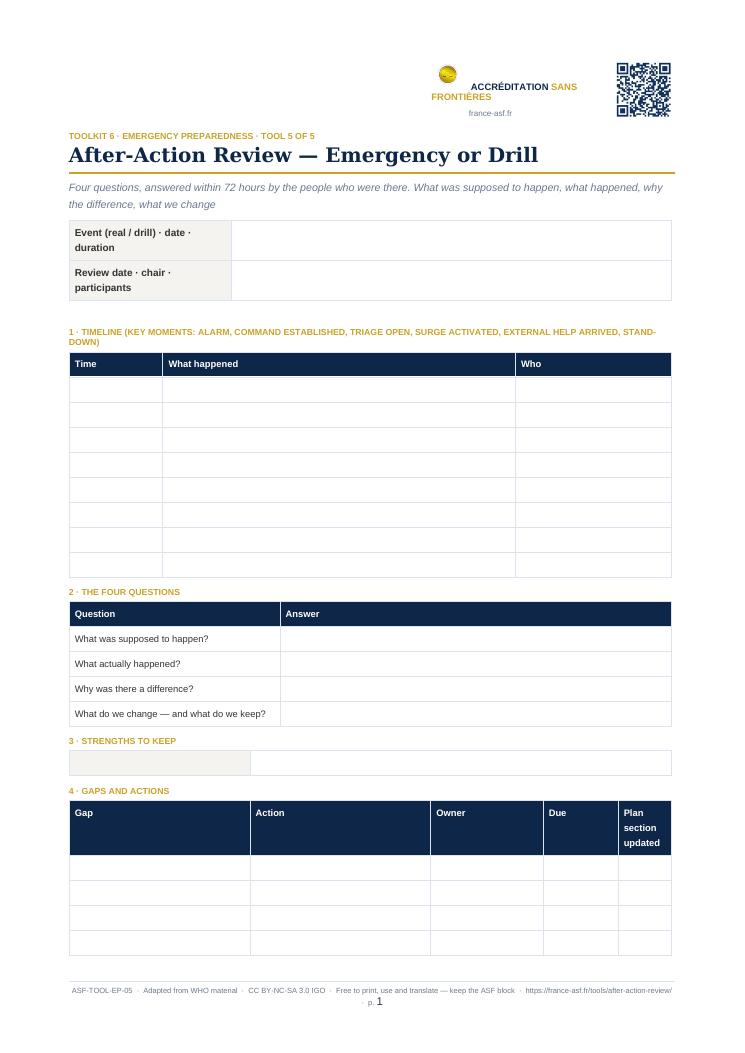
What it is
The after-action review for any real incident or drill: timeline, the four questions, strengths to keep, gaps with owners and dates, and the update to the plan.
Where to use it
Within 72 hours of any activation or drill; chaired by someone who was not the incident commander; to the board within two weeks. Evidence for: Hospital Standard 3 — emergency preparedness (exercise and review); Governance — improvement. Evidence for: Hospital Standard 3 — emergency preparedness (exercise and review); Governance — improvement. Evidence for: Hospital Standard 3 — emergency preparedness (exercise and review); Governance — improvement. Evidence for: Hospital Standard 3 — emergency preparedness (exercise and review); Governance — improvement. Evidence for: Hospital Standard 3 — emergency preparedness (exercise and review); Governance — improvement. Evidence for: Hospital Standard 3 — emergency preparedness (exercise and review); Governance — improvement. Evidence for: Hospital Standard 3 — emergency preparedness (exercise and review); Governance — improvement.
Translate and adapt
English master edition. Georgian and other translations are added as they are clinically reviewed. Any facility may translate, add its logo and adapt wording to local practice — keeping the ASF block, the source attribution and the licence line on the sheet. Clinical thresholds and drug doses must be confirmed against national protocols before use.
The same code is printed on the tool itself. Scan it in any facility to reach this page.
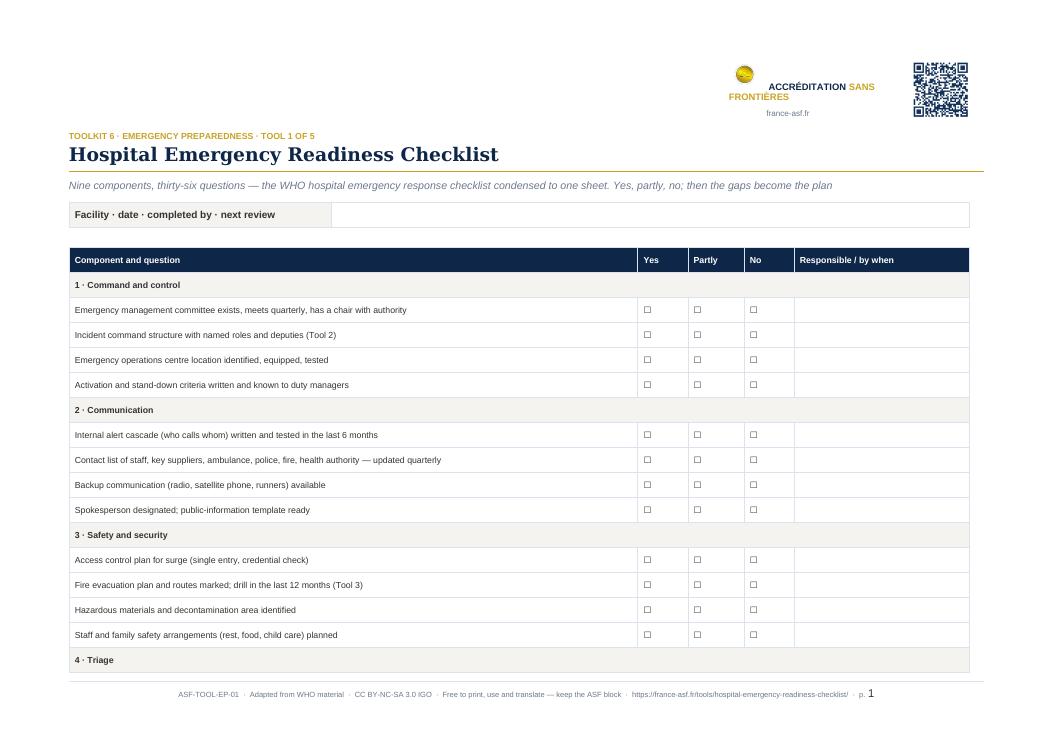 Hospital Emergency Readiness Checklist
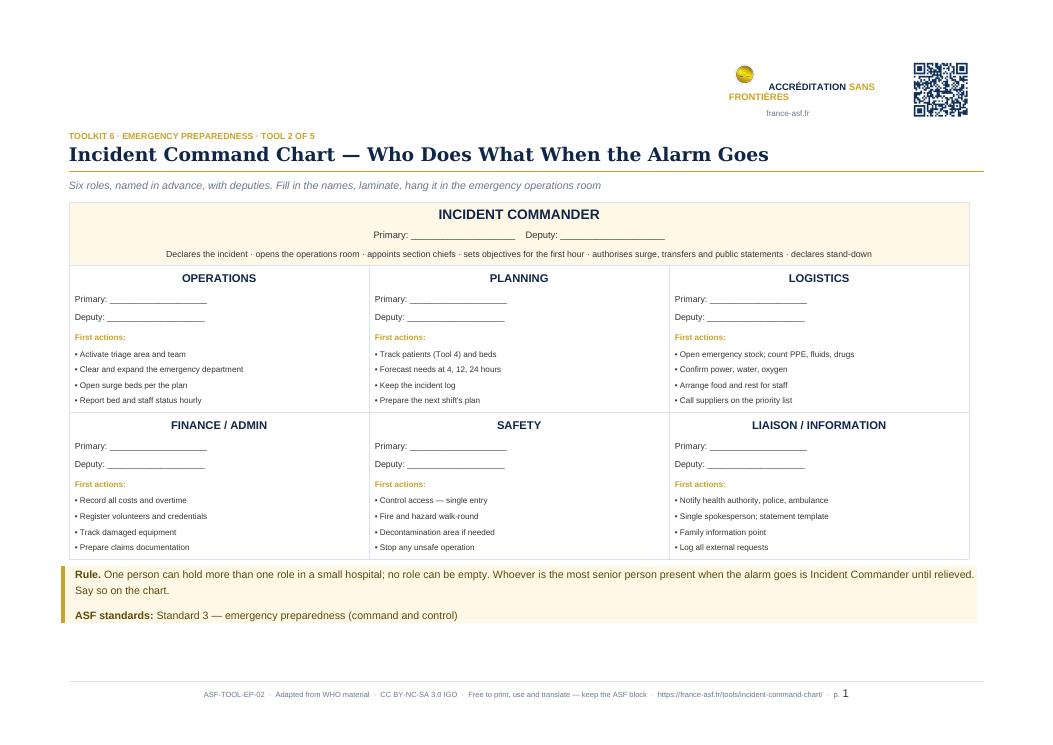 Incident Command Chart — Who Does What When the Alarm Goes
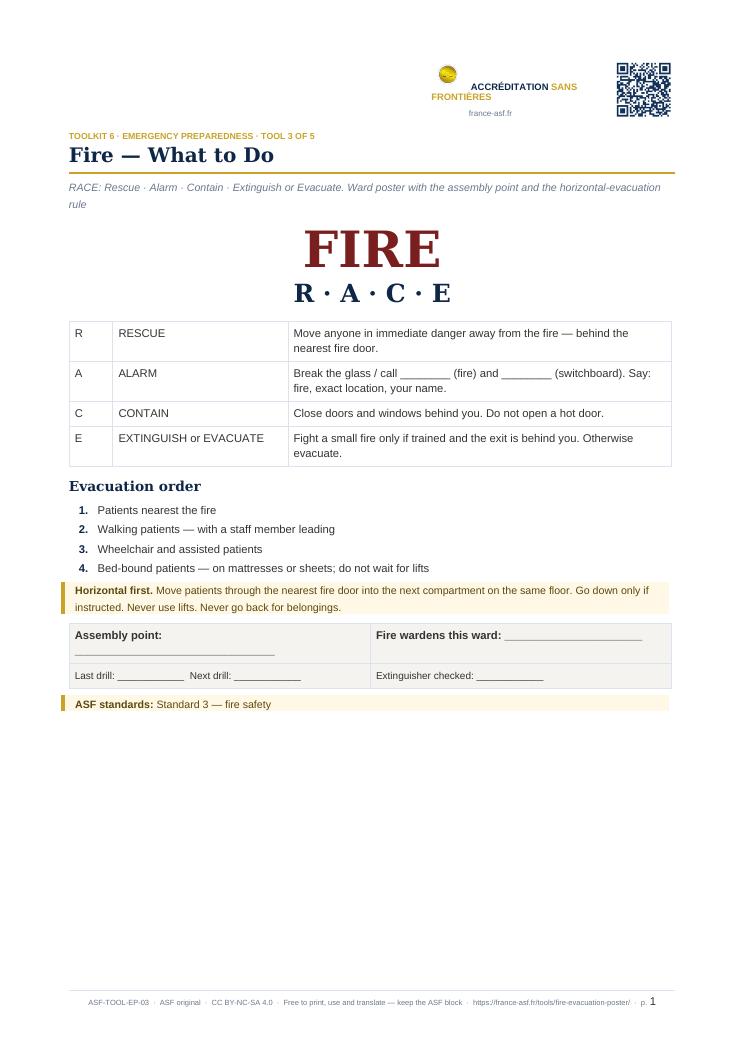 Fire — What to Do
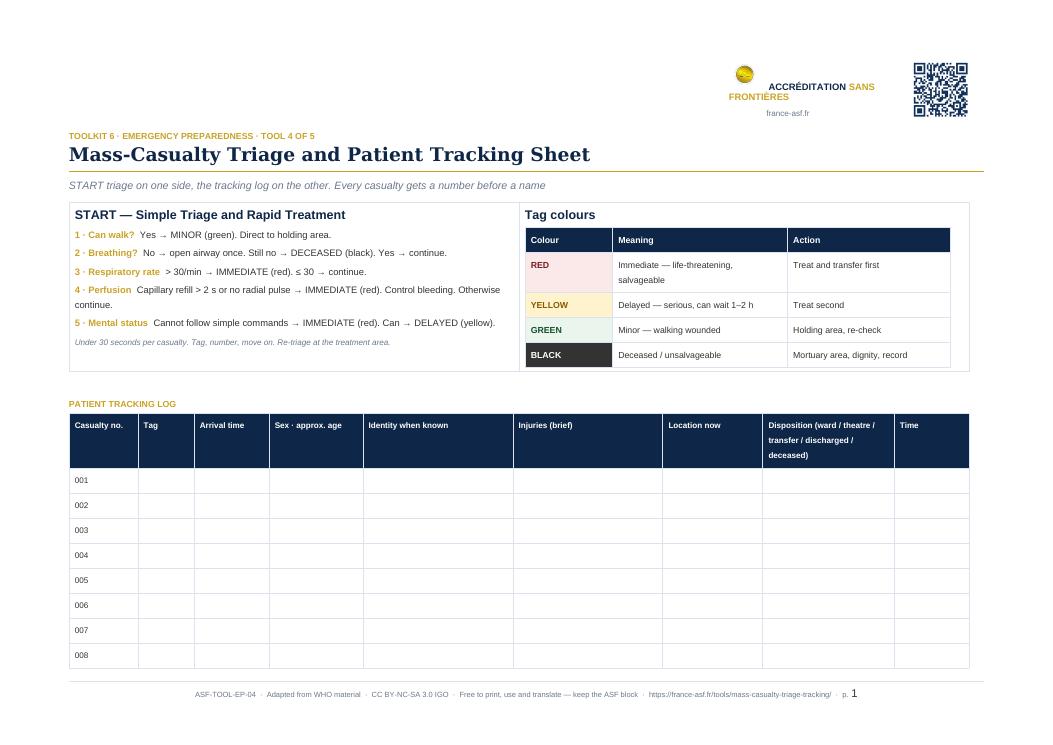 Mass-Casualty Triage and Patient Tracking Sheet
Print to share.