
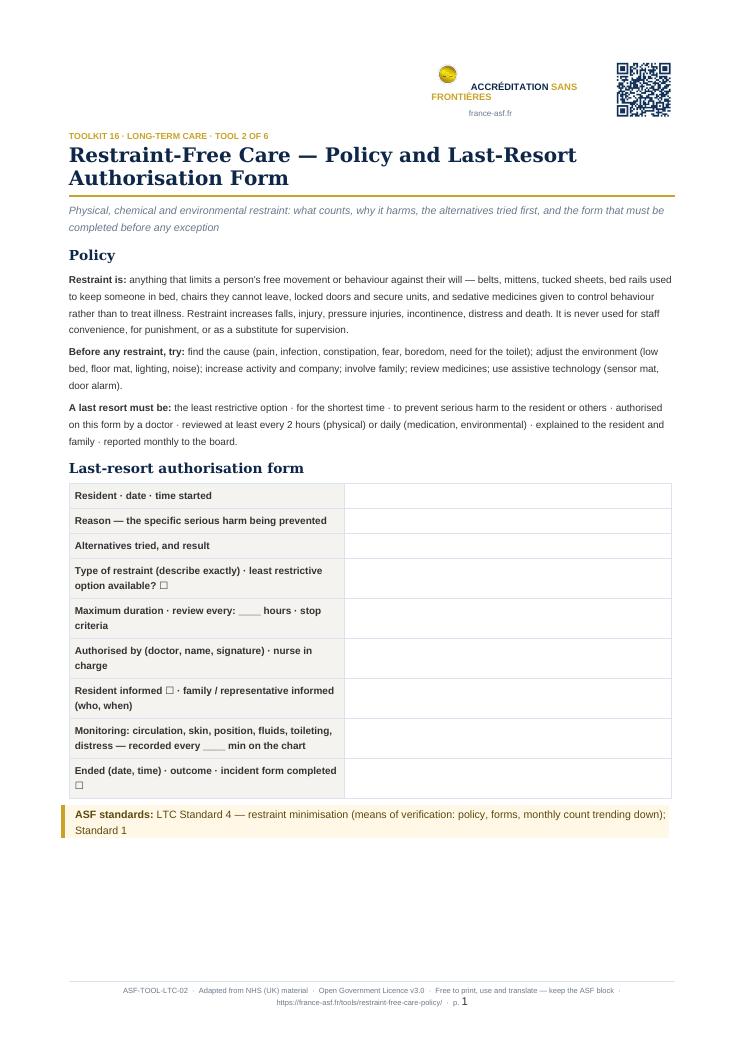
Restraint-Free Care — Policy and Last-Resort Authorisation Form
Physical, chemical and environmental restraint: what counts, why it harms, the alternatives tried first, and the form that must be completed before any exception
What it is
A restraint-minimisation policy (definitions including bed rails, belts, locked doors, sedatives for behaviour), the harms, the alternatives, and the authorisation form: reason, alternatives tried, type, duration, review interval, doctor's order, family informed, monitoring record.
Where to use it
Adopt at the board; the form in the record for every instance; audited monthly. Evidence for: LTC Standard 4 — freedom from restraint; Standard 1 — dignity. Evidence for: LTC Standard 4 — freedom from restraint; Standard 1 — dignity. Evidence for: LTC Standard 4 — freedom from restraint; Standard 1 — dignity. Evidence for: LTC Standard 4 — freedom from restraint; Standard 1 — dignity.
Translate and adapt
English master edition. Georgian and other translations are added as they are clinically reviewed. Any facility may translate, add its logo and adapt wording to local practice — keeping the ASF block, the source attribution and the licence line on the sheet. Clinical thresholds and drug doses must be confirmed against national protocols before use.
The same code is printed on the tool itself. Scan it in any facility to reach this page.
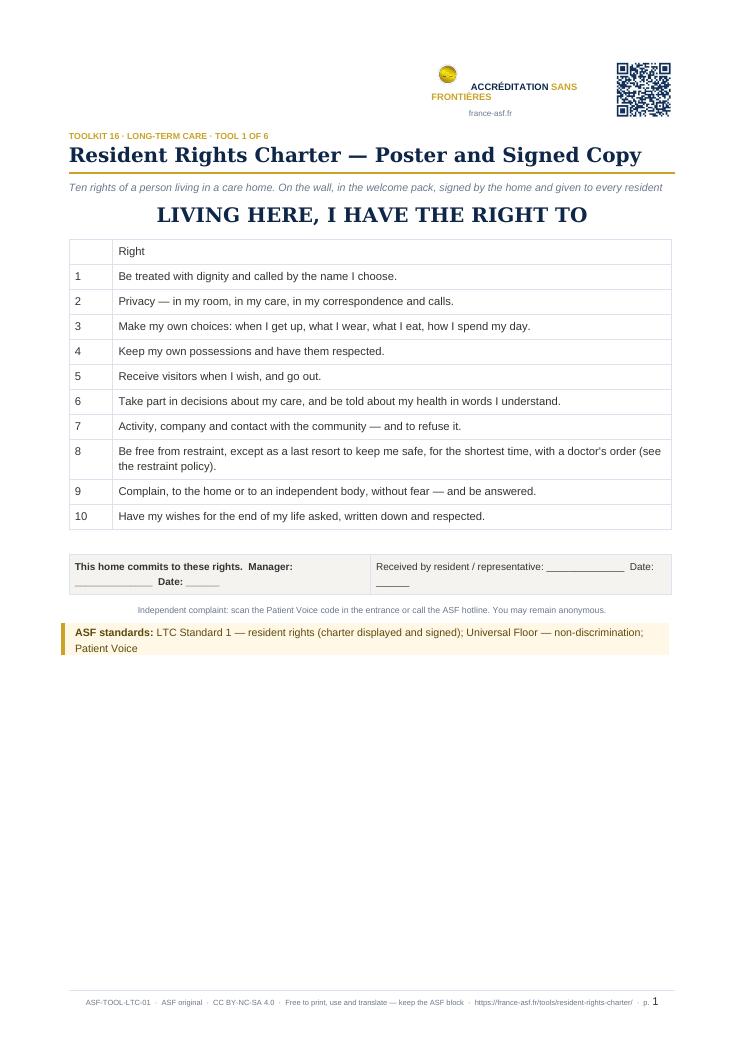 Resident Rights Charter — Poster and Signed Copy
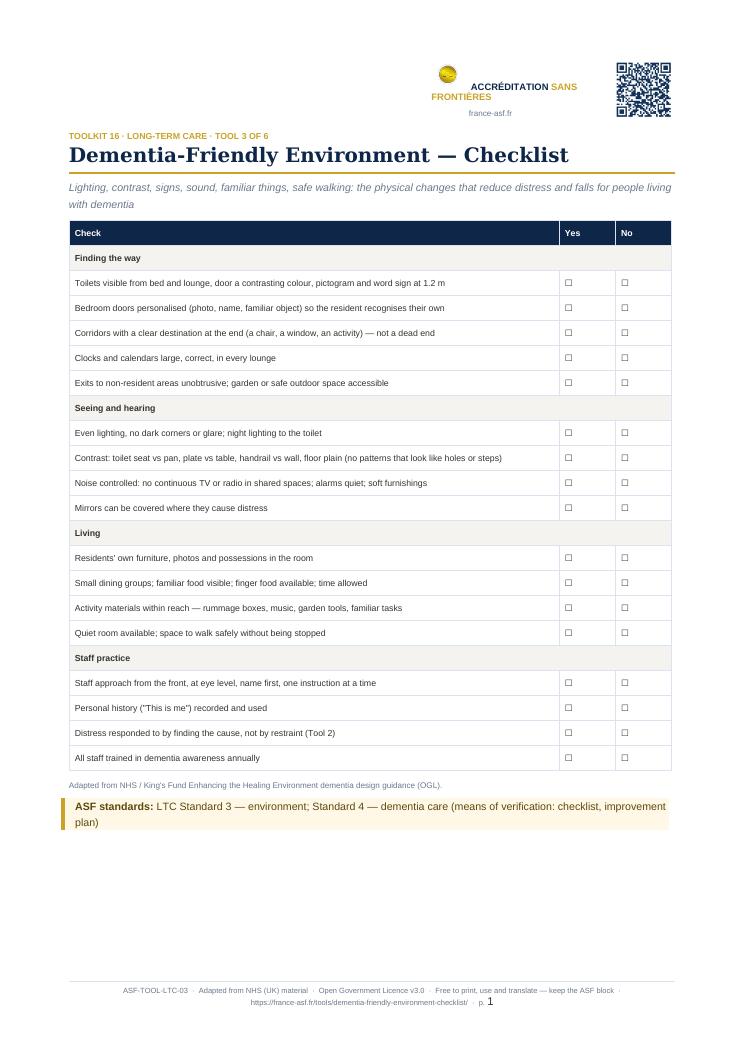 Dementia-Friendly Environment — Checklist
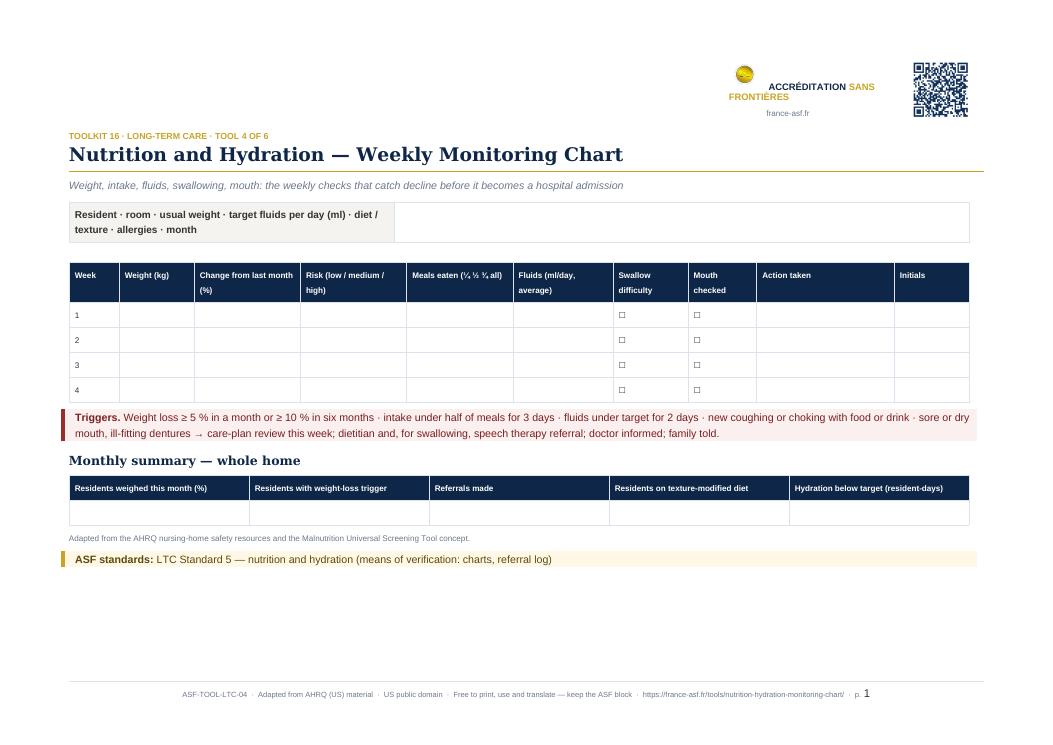 Nutrition and Hydration — Weekly Monitoring Chart
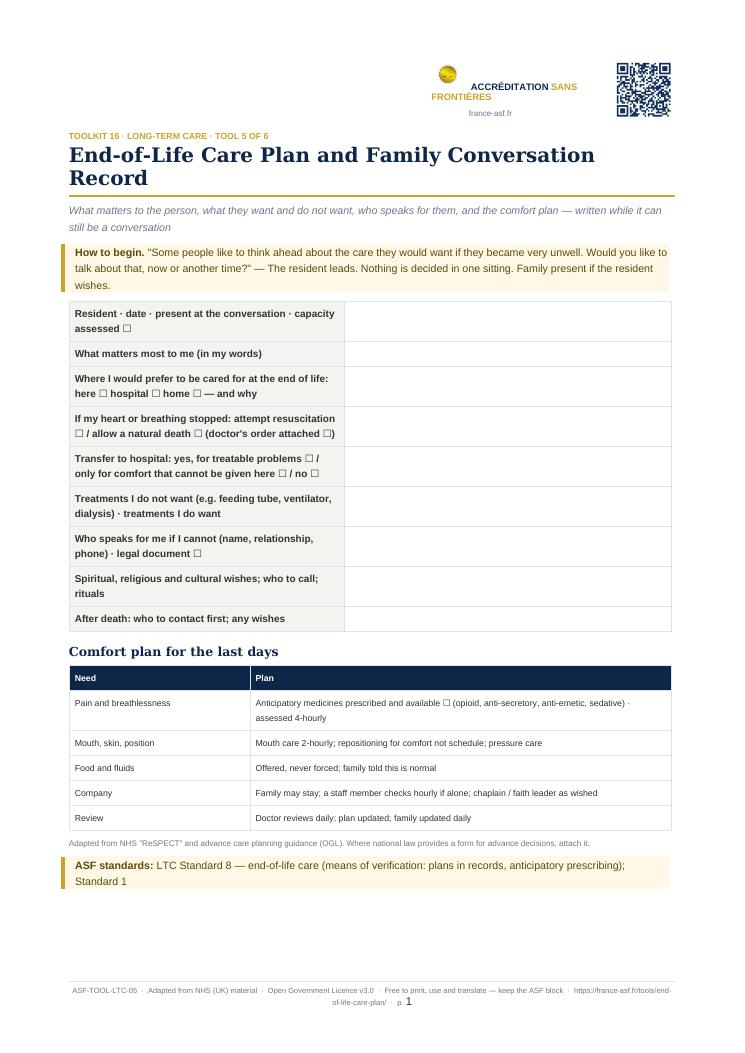 End-of-Life Care Plan and Family Conversation Record
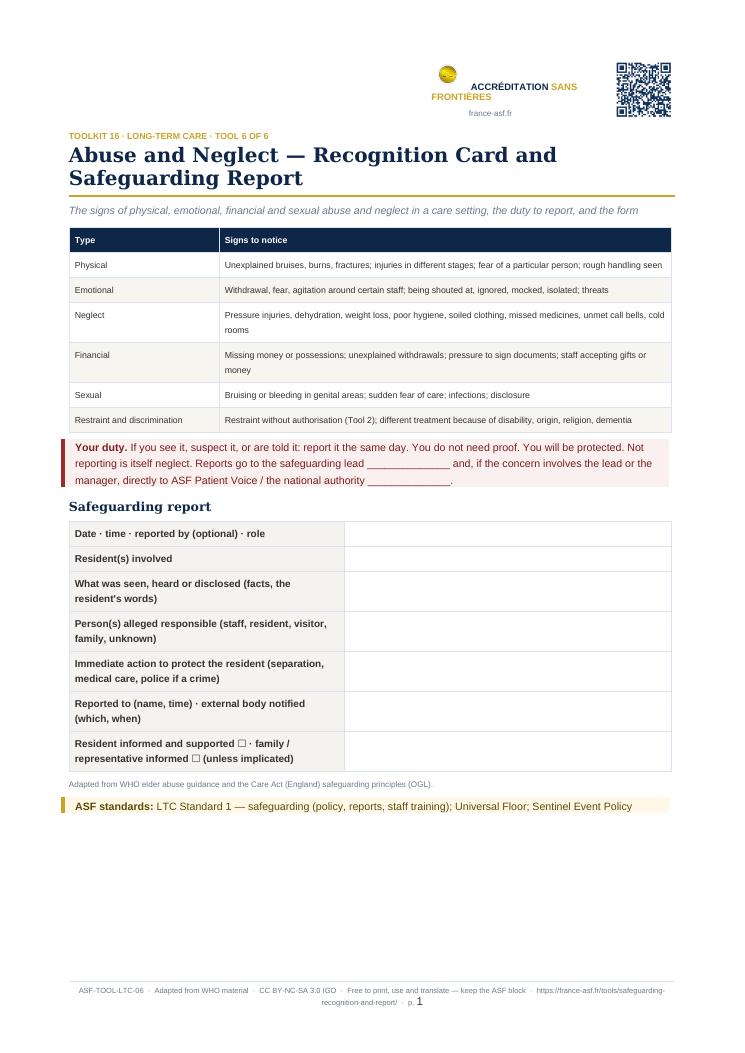 Abuse and Neglect — Recognition Card and Safeguarding Report
Print to share.