
Pressure-Injury Risk Assessment — Six Factors
Sensory perception, moisture, activity, mobility, nutrition, friction and shear. Score on admission, then every 48 hours or on any change
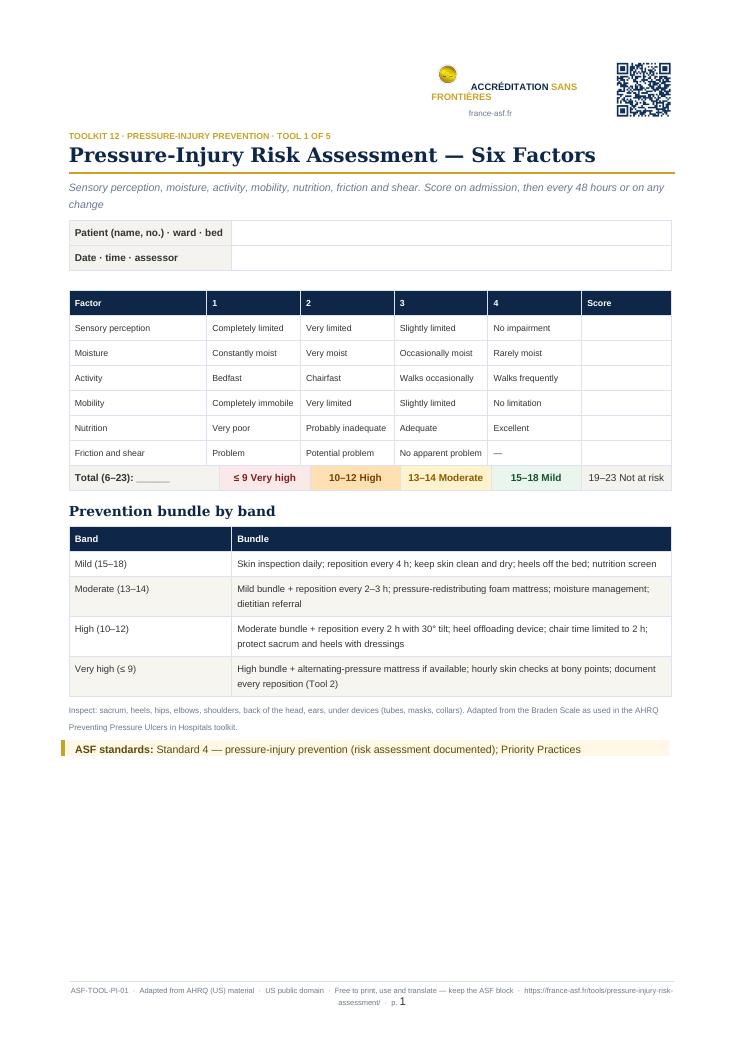
What it is
A Braden-based six-factor risk scale (6–23) with the risk bands and the prevention bundle each band triggers, and the skin-inspection sites.
Where to use it
Every admission within 8 hours; every 48 hours in wards, daily in ICU; after surgery, transfer or deterioration. Evidence for: Hospital Standard 4 — pressure-injury prevention; Priority Practices. Evidence for: Hospital Standard 4 — pressure-injury prevention; Priority Practices. Evidence for: Hospital Standard 4 — pressure-injury prevention; Priority Practices. Evidence for: Hospital Standard 4 — pressure-injury prevention; Priority Practices. Evidence for: Hospital Standard 4 — pressure-injury prevention; Priority Practices. Evidence for: Hospital Standard 4 — pressure-injury prevention; Priority Practices.
Translate and adapt
English master edition. Georgian and other translations are added as they are clinically reviewed. Any facility may translate, add its logo and adapt wording to local practice — keeping the ASF block, the source attribution and the licence line on the sheet. Clinical thresholds and drug doses must be confirmed against national protocols before use.
The same code is printed on the tool itself. Scan it in any facility to reach this page.
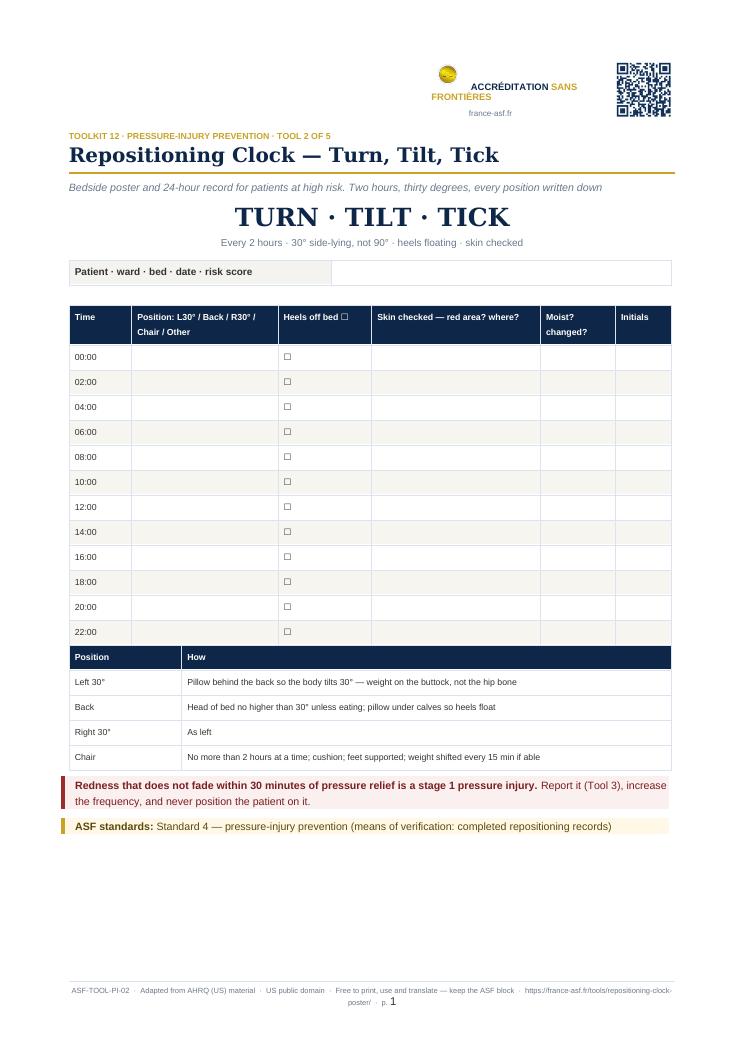 Repositioning Clock — Turn, Tilt, Tick
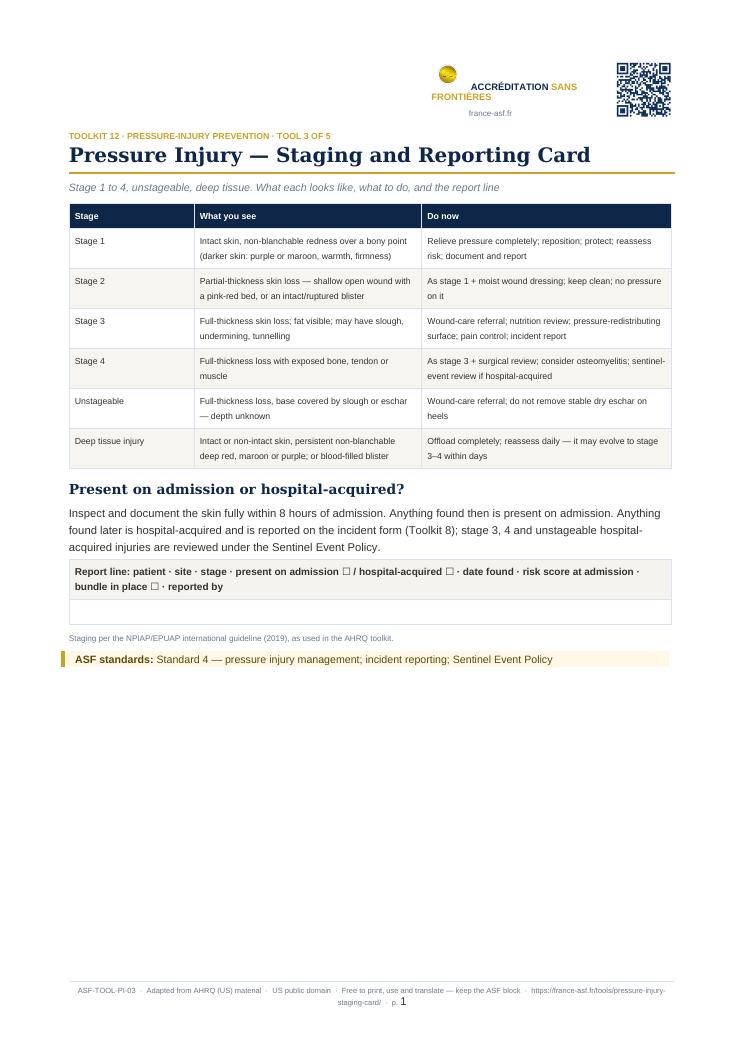 Pressure Injury — Staging and Reporting Card
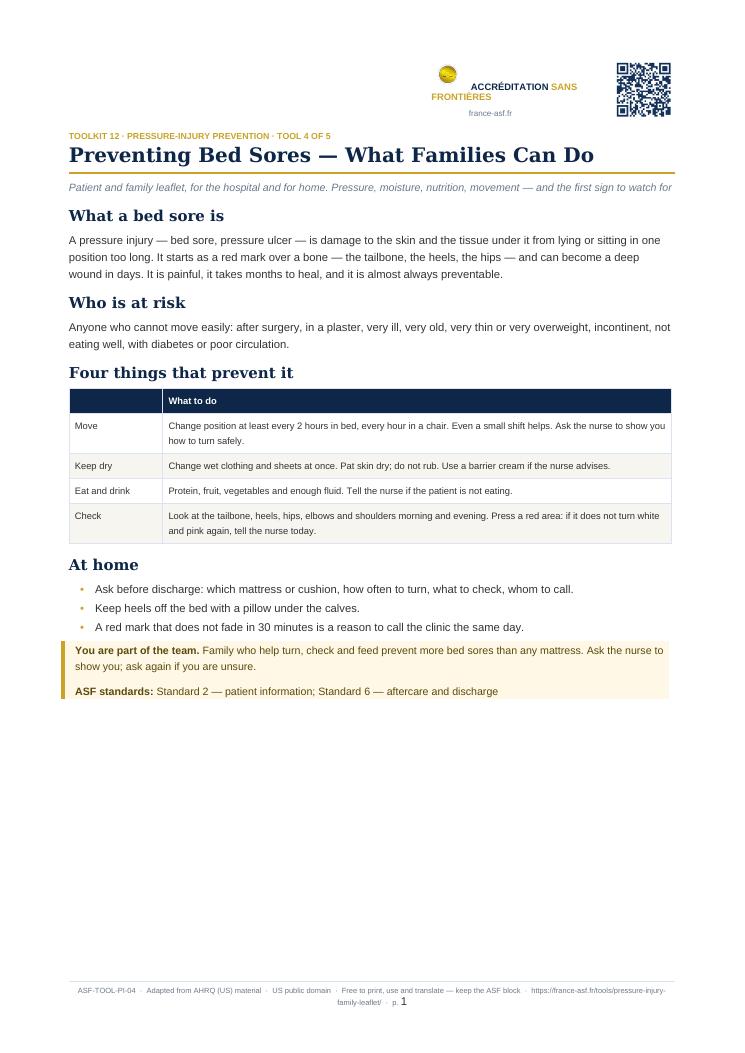 Preventing Bed Sores — What Families Can Do
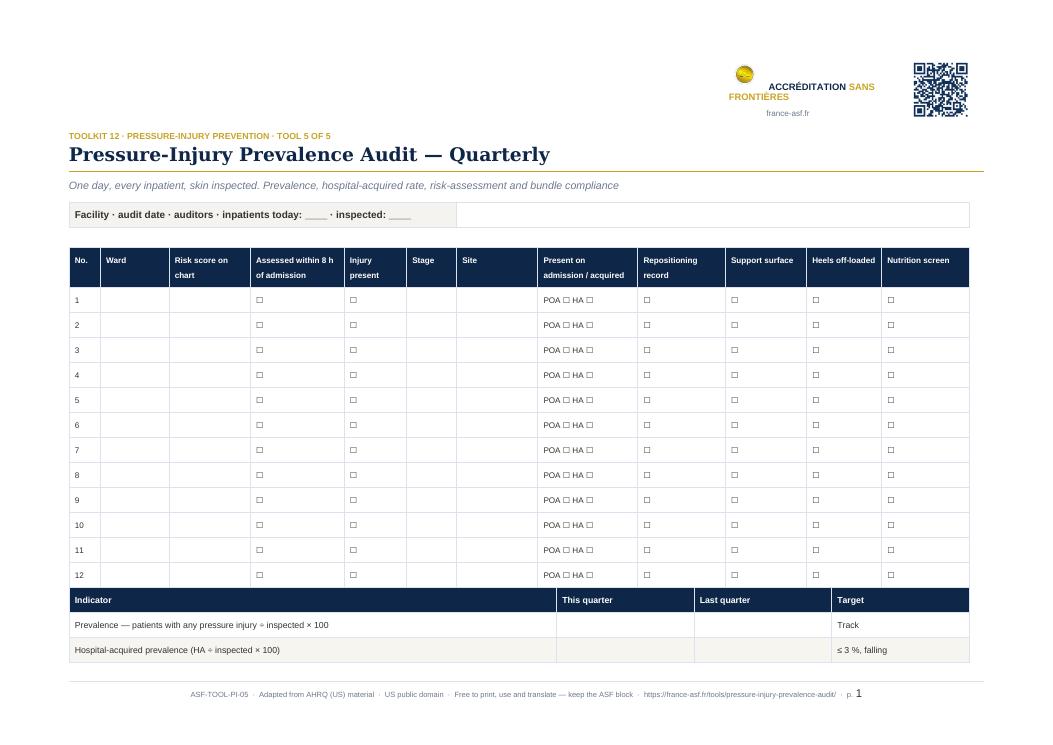 Pressure-Injury Prevalence Audit — Quarterly
Print to share.