
Repositioning Clock — Turn, Tilt, Tick
Bedside poster and 24-hour record for patients at high risk. Two hours, thirty degrees, every position written down
What it is
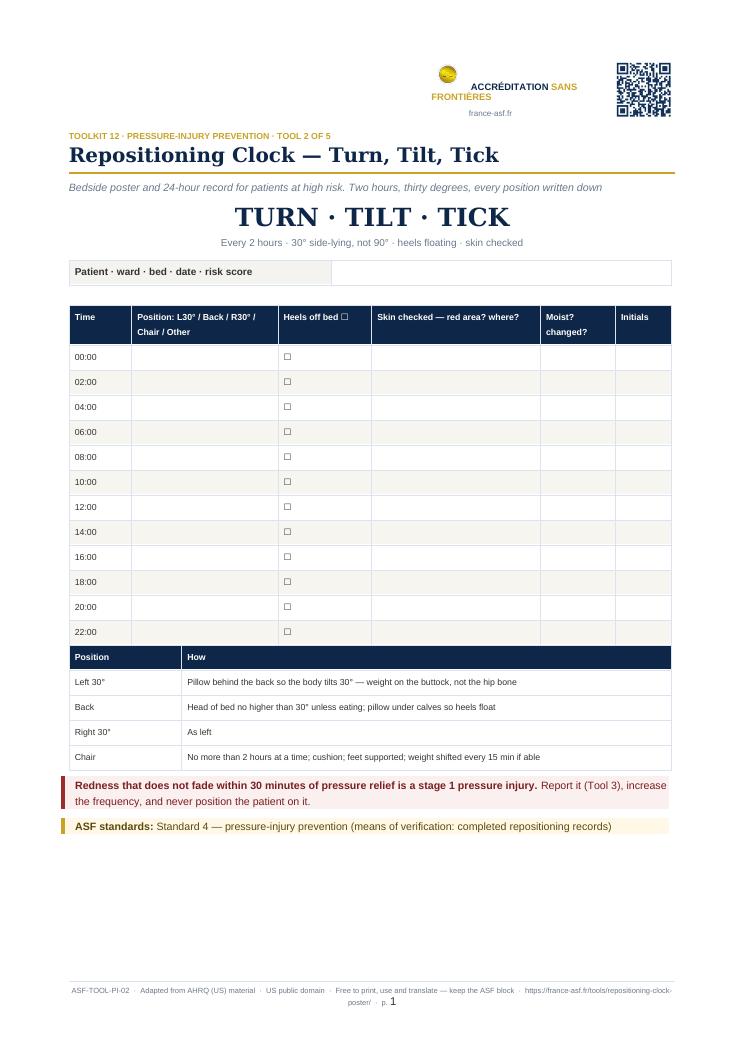
A 24-hour repositioning record on a clock face: the position at each two-hour point (left 30°, back, right 30°, chair), heel check, skin check, signed — with the four positions illustrated in words.
Where to use it
At the bedside of every patient scored high or very high; a new sheet every day; filed in the chart. Evidence for: Hospital Standard 4 — pressure-injury prevention (repositioning documented). Evidence for: Hospital Standard 4 — pressure-injury prevention (repositioning documented). Evidence for: Hospital Standard 4 — pressure-injury prevention (repositioning documented). Evidence for: Hospital Standard 4 — pressure-injury prevention (repositioning documented). Evidence for: Hospital Standard 4 — pressure-injury prevention (repositioning documented). Evidence for: Hospital Standard 4 — pressure-injury prevention (repositioning documented).
Translate and adapt
English master edition. Georgian and other translations are added as they are clinically reviewed. Any facility may translate, add its logo and adapt wording to local practice — keeping the ASF block, the source attribution and the licence line on the sheet. Clinical thresholds and drug doses must be confirmed against national protocols before use.
The same code is printed on the tool itself. Scan it in any facility to reach this page.
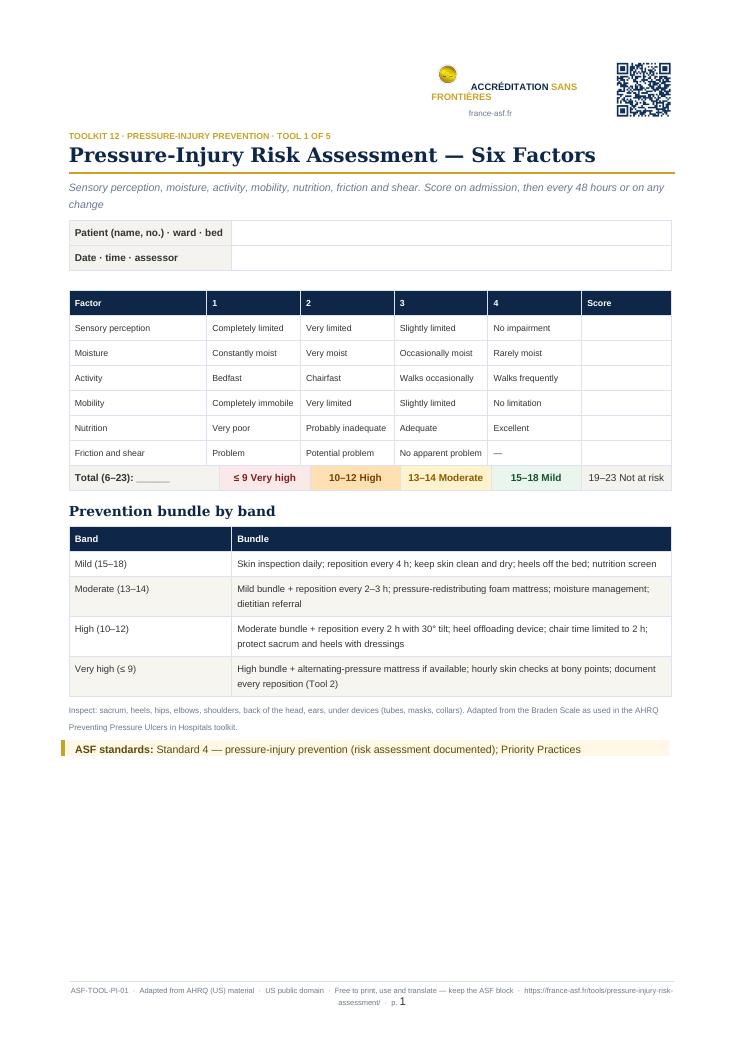 Pressure-Injury Risk Assessment — Six Factors
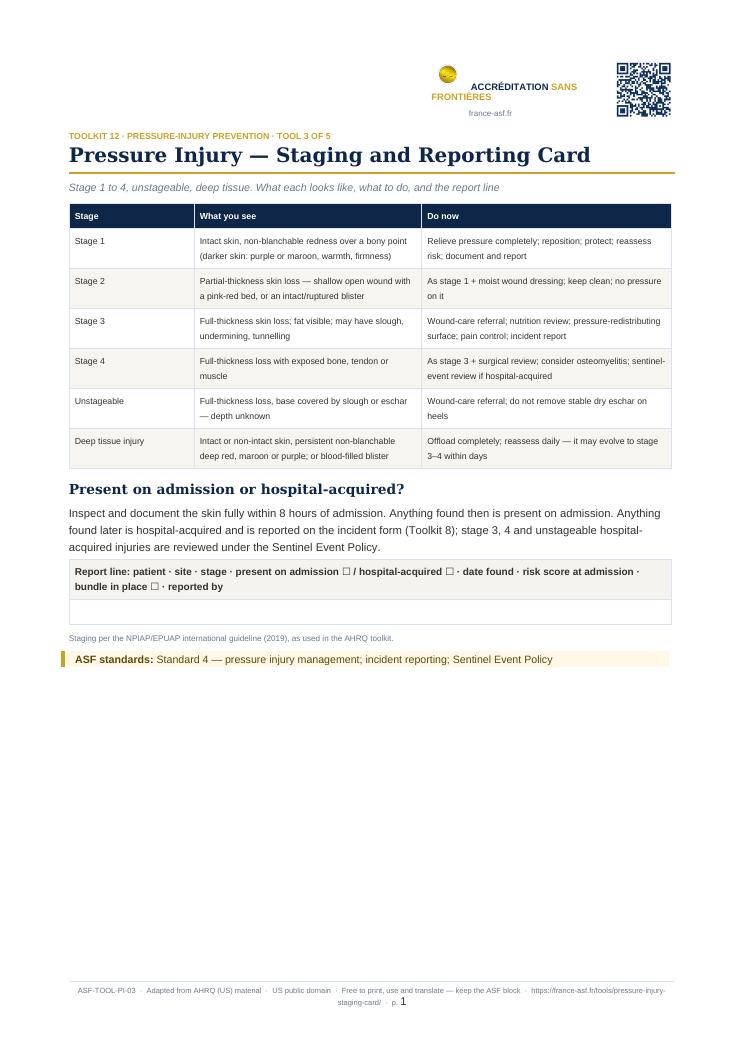 Pressure Injury — Staging and Reporting Card
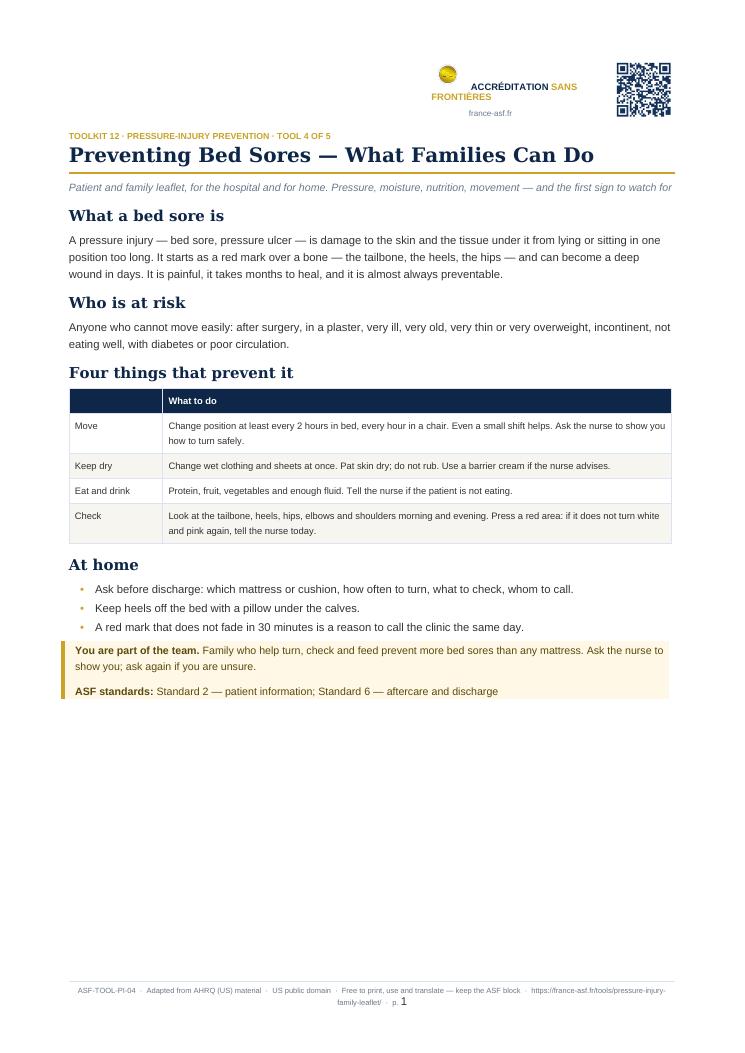 Preventing Bed Sores — What Families Can Do
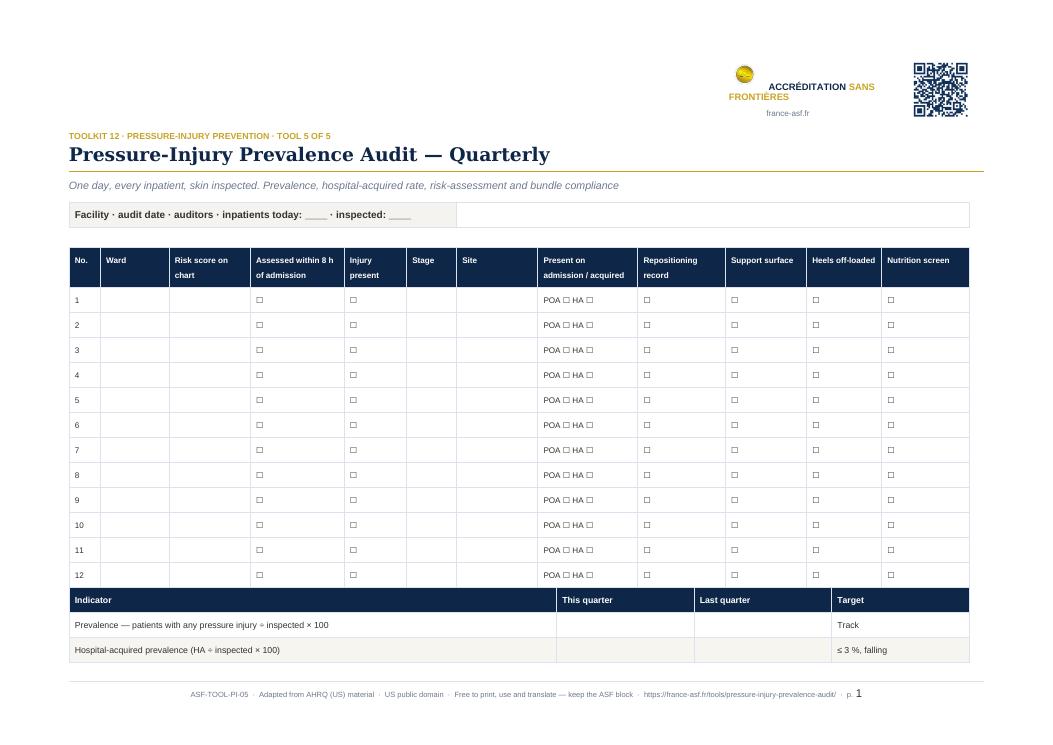 Pressure-Injury Prevalence Audit — Quarterly
Print to share.