
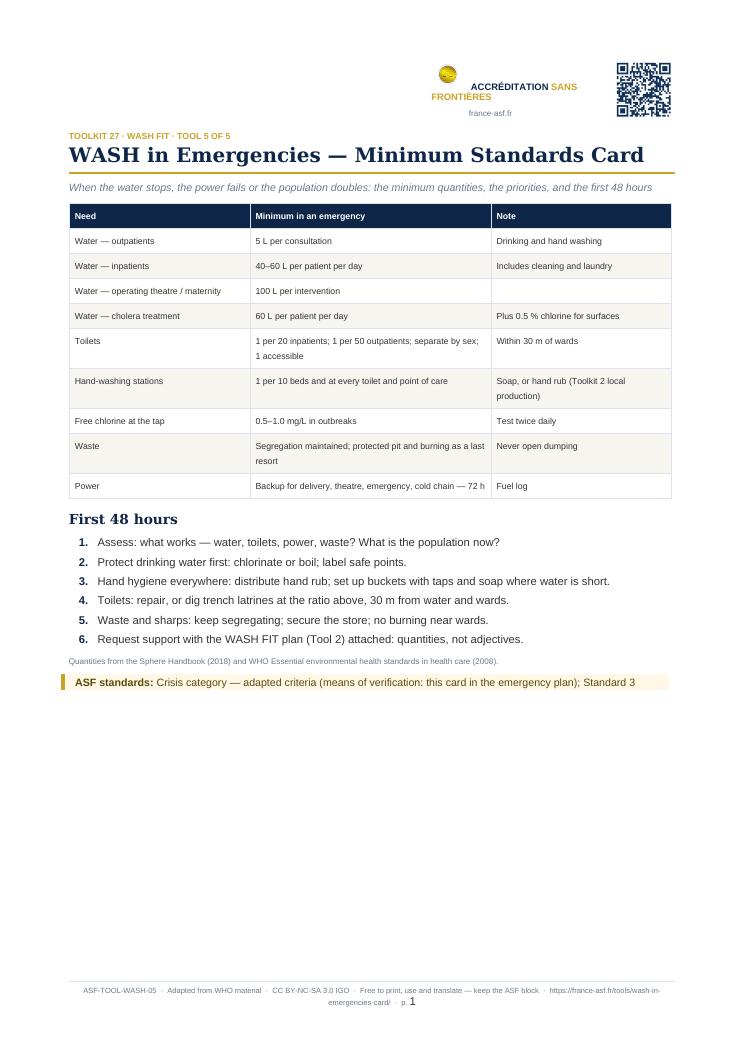
WASH in Emergencies — Minimum Standards Card
When the water stops, the power fails or the population doubles: the minimum quantities, the priorities, and the first 48 hours
What it is
The minimum WASH quantities for a health facility in an emergency (litres per patient per day by service, toilets per users, chlorine concentrations), the priority order, and the first-48-hours actions — for Crisis-category facilities and for any facility hit by an outage or an influx.
Where to use it
Emergency kit; emergency operations room (Toolkit 6); WASH FIT team. Evidence for: Crisis category — adapted criteria; Standard 3 — emergency preparedness and environment. Evidence for: Crisis category — adapted criteria; Standard 3 — emergency preparedness and environment. Evidence for: Crisis category — adapted criteria; Standard 3 — emergency preparedness and environment. Evidence for: Crisis category — adapted criteria; Standard 3 — emergency preparedness and environment. Evidence for: Crisis category — adapted criteria; Standard 3 — emergency preparedness and environment.
Translate and adapt
English master edition. Georgian and other translations are added as they are clinically reviewed. Any facility may translate, add its logo and adapt wording to local practice — keeping the ASF block, the source attribution and the licence line on the sheet. Clinical thresholds and drug doses must be confirmed against national protocols before use.
The same code is printed on the tool itself. Scan it in any facility to reach this page.
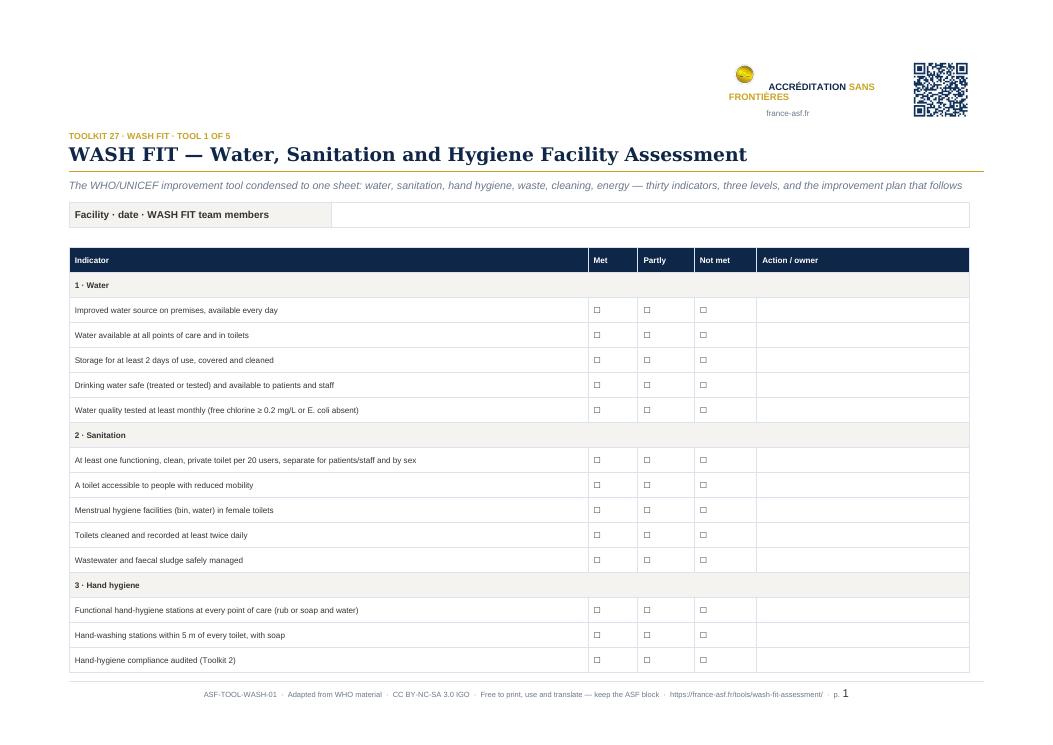 WASH FIT — Water, Sanitation and Hygiene Facility Assessment
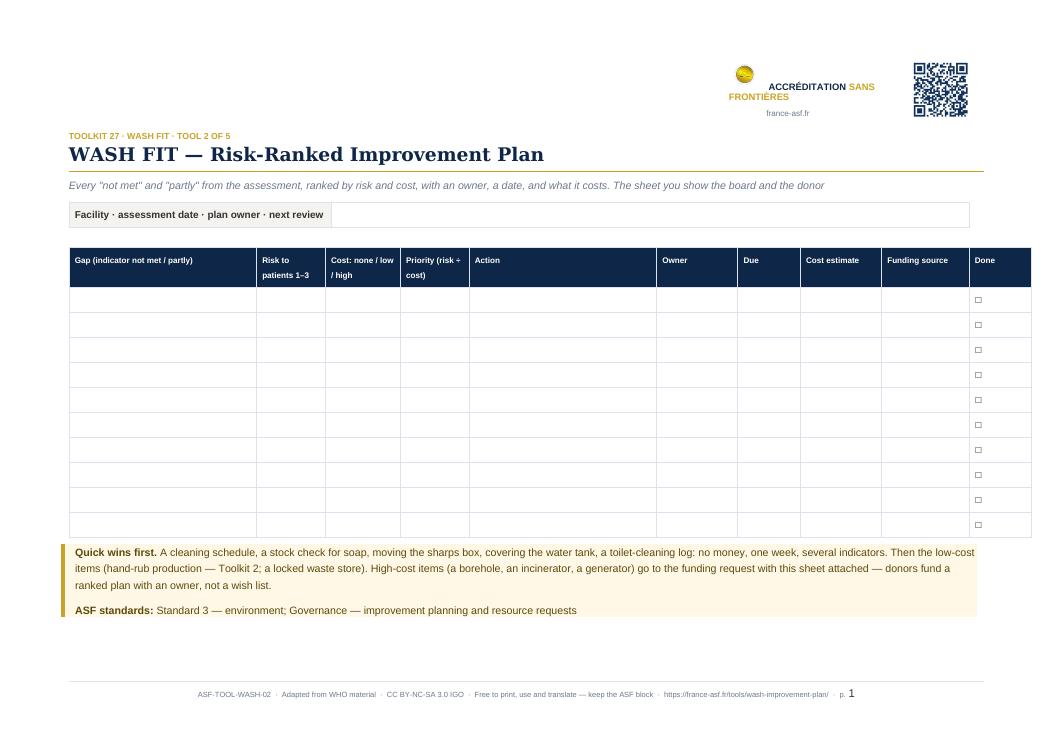 WASH FIT — Risk-Ranked Improvement Plan
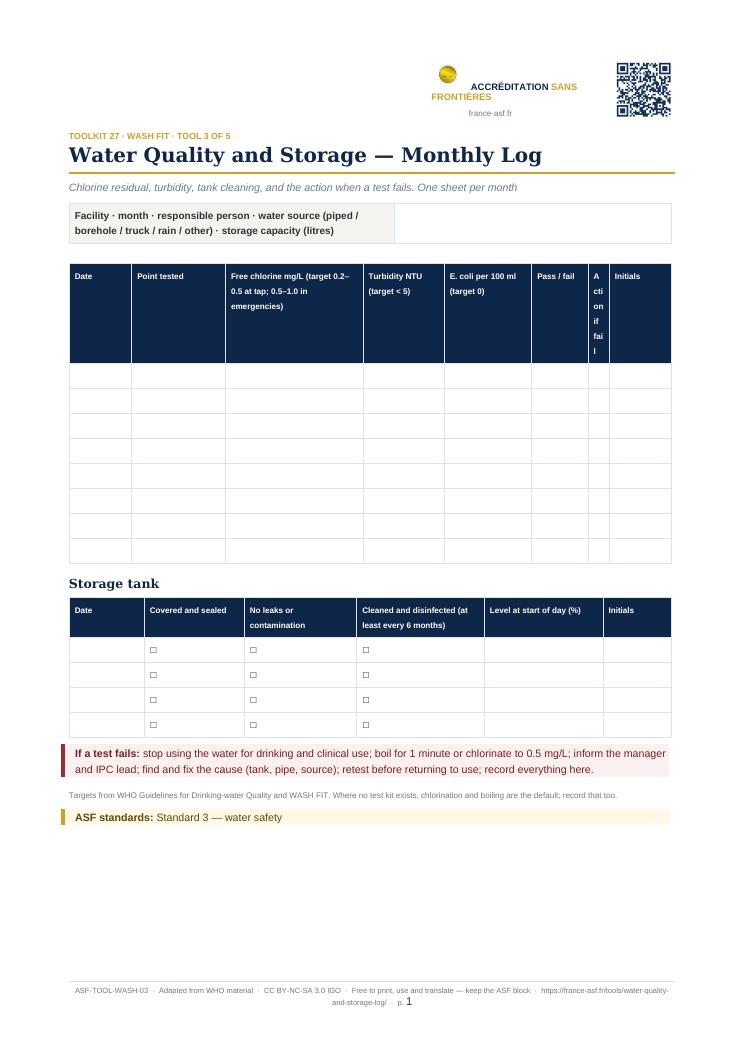 Water Quality and Storage — Monthly Log
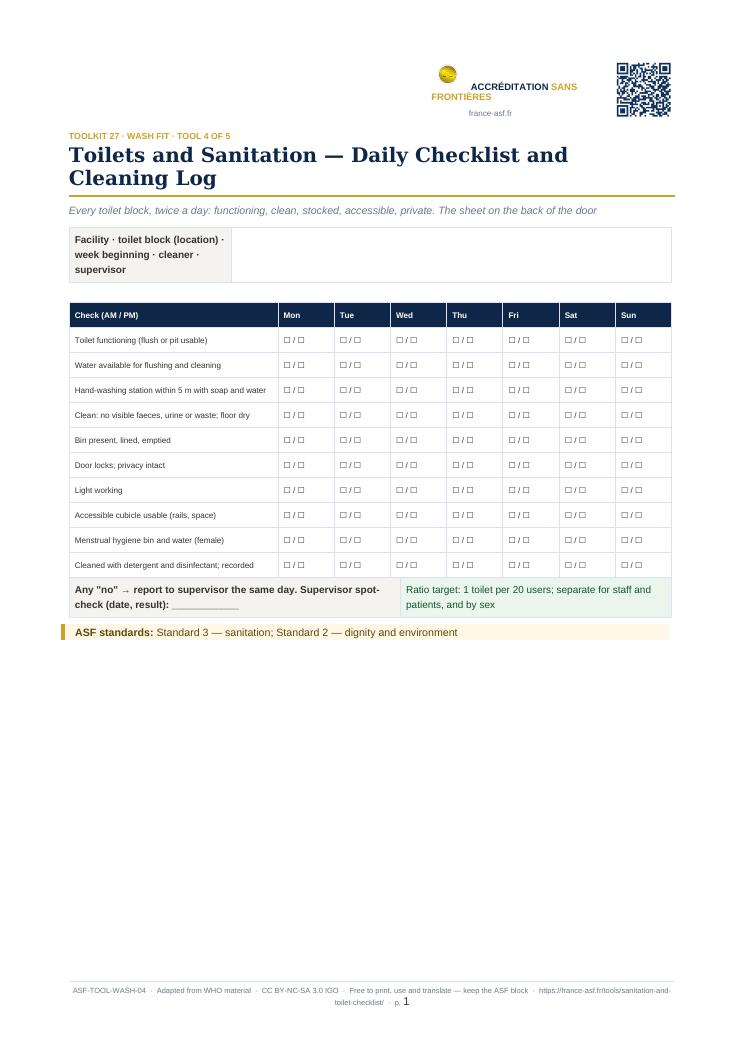 Toilets and Sanitation — Daily Checklist and Cleaning Log
Print to share.