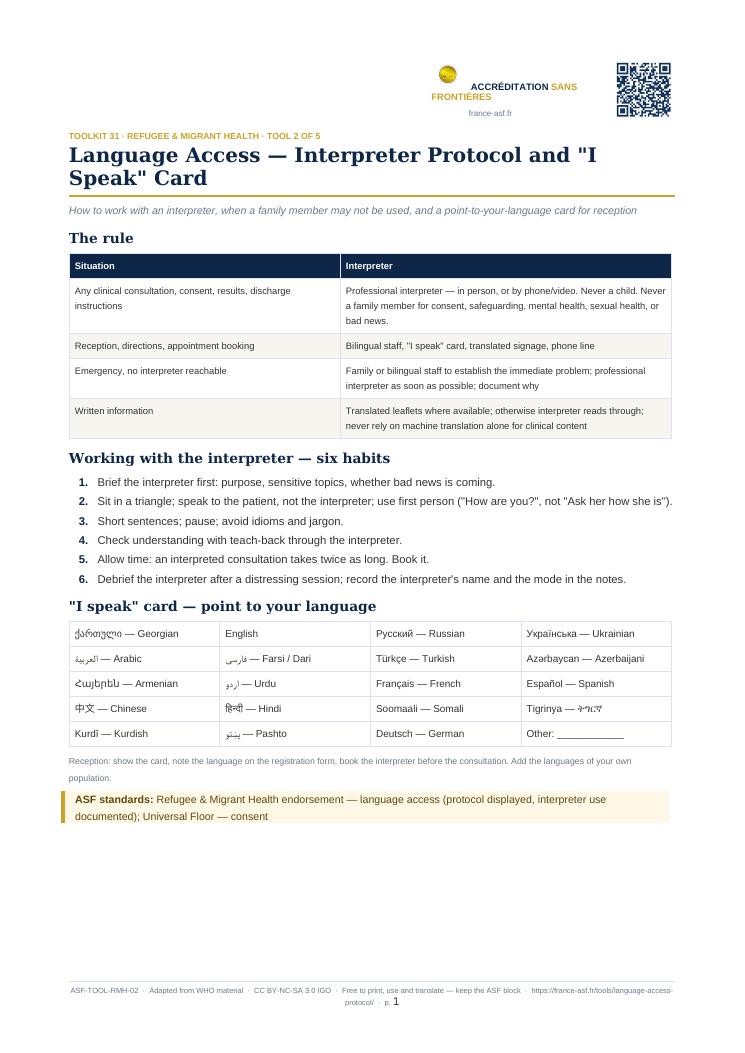
Language Access — Interpreter Protocol and "I Speak" Card
How to work with an interpreter, when a family member may not be used, and a point-to-your-language card for reception
What it is
The interpreter protocol (professional first, phone/video second, family only in emergency and never for consent, safeguarding or bad news), the briefing and technique for the clinician, and an "I speak" card with twenty languages for reception.
Where to use it
Reception desk (card); every consulting room (protocol); induction pack. Evidence for: Refugee & Migrant Health endorsement — language access; Standard 2 — reception and information; Universal Floor — informed consent. Evidence for: Refugee & Migrant Health endorsement — language access; Standard 2 — reception and information; Universal Floor — informed consent. Evidence for: Refugee & Migrant Health endorsement — language access; Standard 2 — reception and information; Universal Floor — informed consent. Evidence for: Refugee & Migrant Health endorsement — language access; Standard 2 — reception and information; Universal Floor — informed consent. Evidence for: Refugee & Migrant Health endorsement — language access; Standard 2 — reception and information; Universal Floor — informed consent.
Translate and adapt
English master edition. Georgian and other translations are added as they are clinically reviewed. Any facility may translate, add its logo and adapt wording to local practice — keeping the ASF block, the source attribution and the licence line on the sheet. Clinical thresholds and drug doses must be confirmed against national protocols before use.
The same code is printed on the tool itself. Scan it in any facility to reach this page.
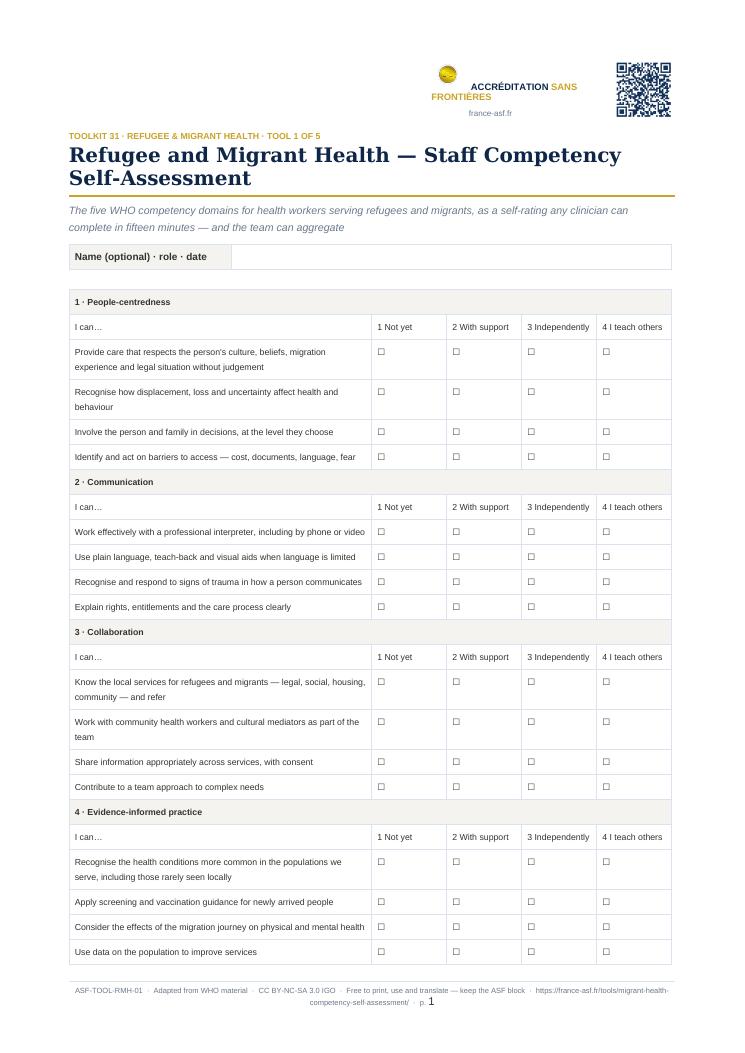 Refugee and Migrant Health — Staff Competency Self-Assessment
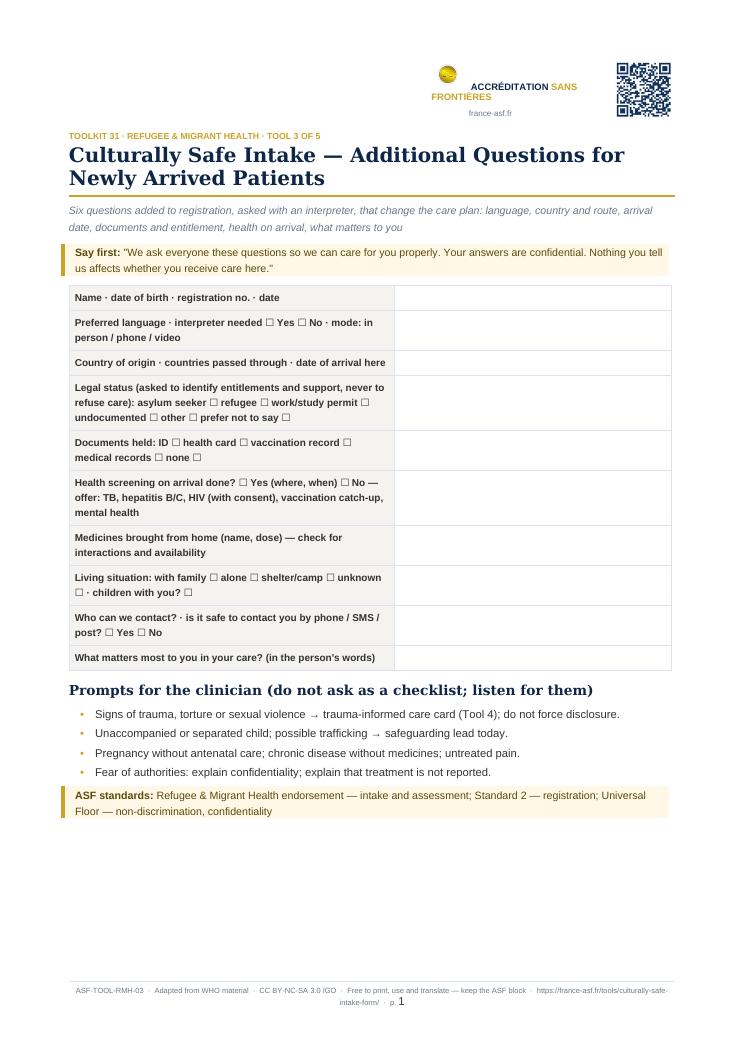 Culturally Safe Intake — Additional Questions for Newly Arrived Patients
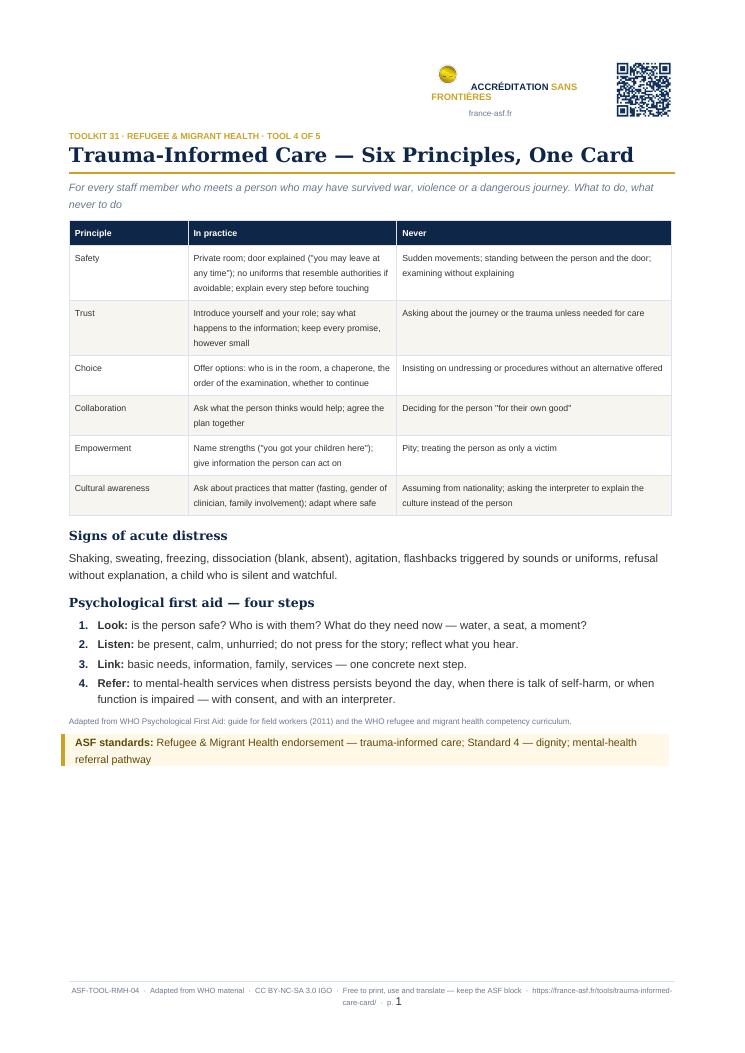 Trauma-Informed Care — Six Principles, One Card
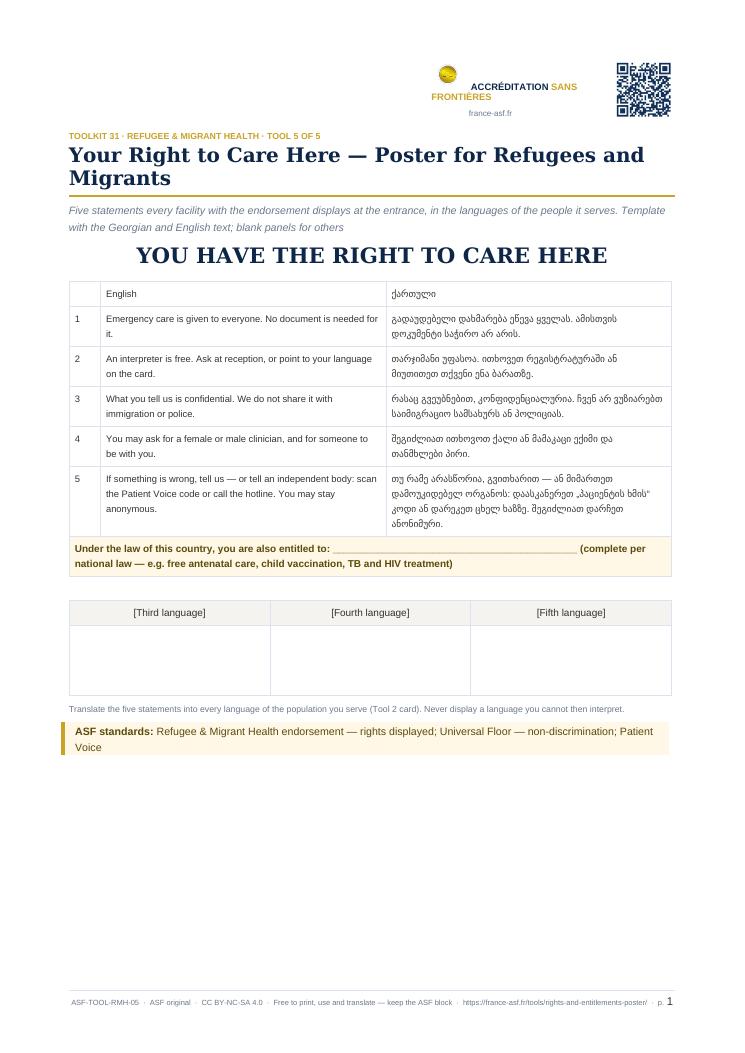 Your Right to Care Here — Poster for Refugees and Migrants
Print to share.