
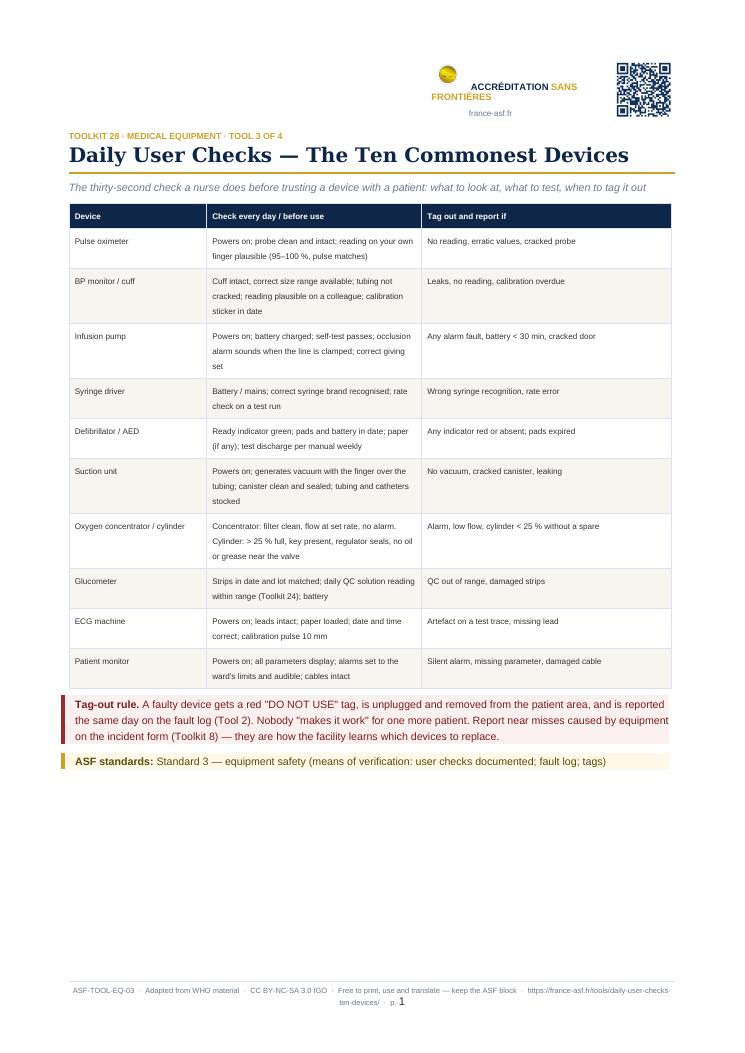
Daily User Checks — The Ten Commonest Devices
The thirty-second check a nurse does before trusting a device with a patient: what to look at, what to test, when to tag it out
What it is
User-level daily checks for pulse oximeter, blood-pressure monitor, infusion pump, syringe driver, defibrillator/AED, suction unit, oxygen concentrator/cylinder, glucometer, ECG machine, patient monitor — the three checks each, the fault signs, and the tag-out rule.
Where to use it
Every ward and department; laminated at the equipment store; part of induction. Evidence for: Standard 3 — equipment safety; Standard 4 — safe care. Evidence for: Standard 3 — equipment safety; Standard 4 — safe care.
Translate and adapt
English master edition. Georgian and other translations are added as they are clinically reviewed. Any facility may translate, add its logo and adapt wording to local practice — keeping the ASF block, the source attribution and the licence line on the sheet. Clinical thresholds and drug doses must be confirmed against national protocols before use.
The same code is printed on the tool itself. Scan it in any facility to reach this page.
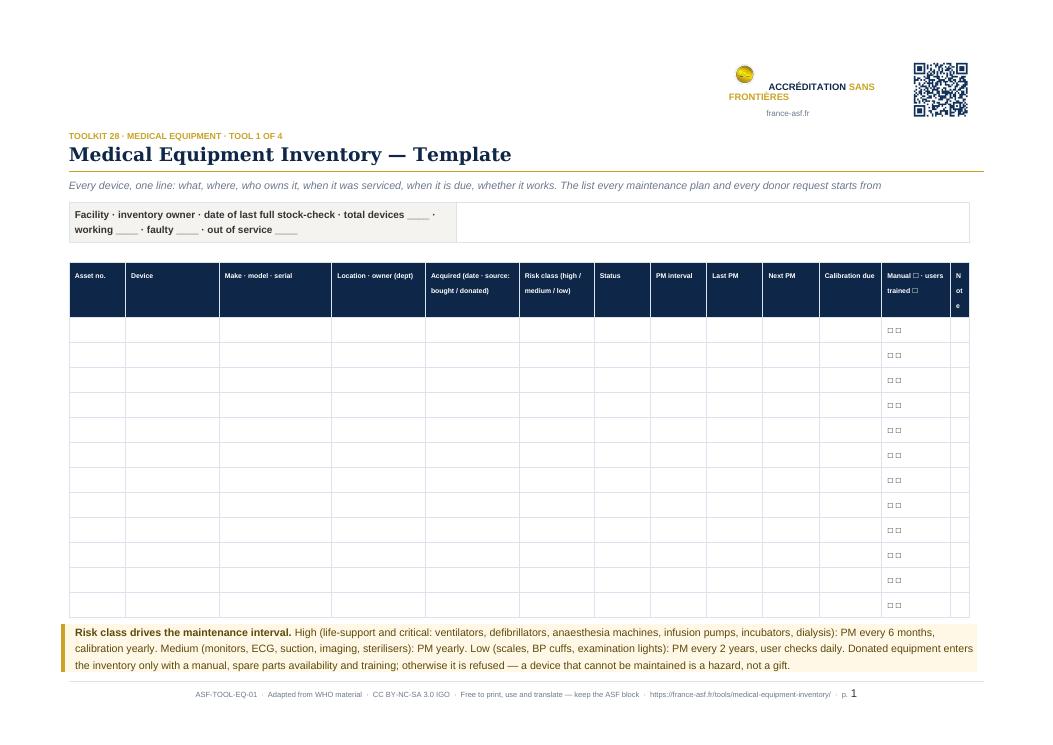 Medical Equipment Inventory — Template
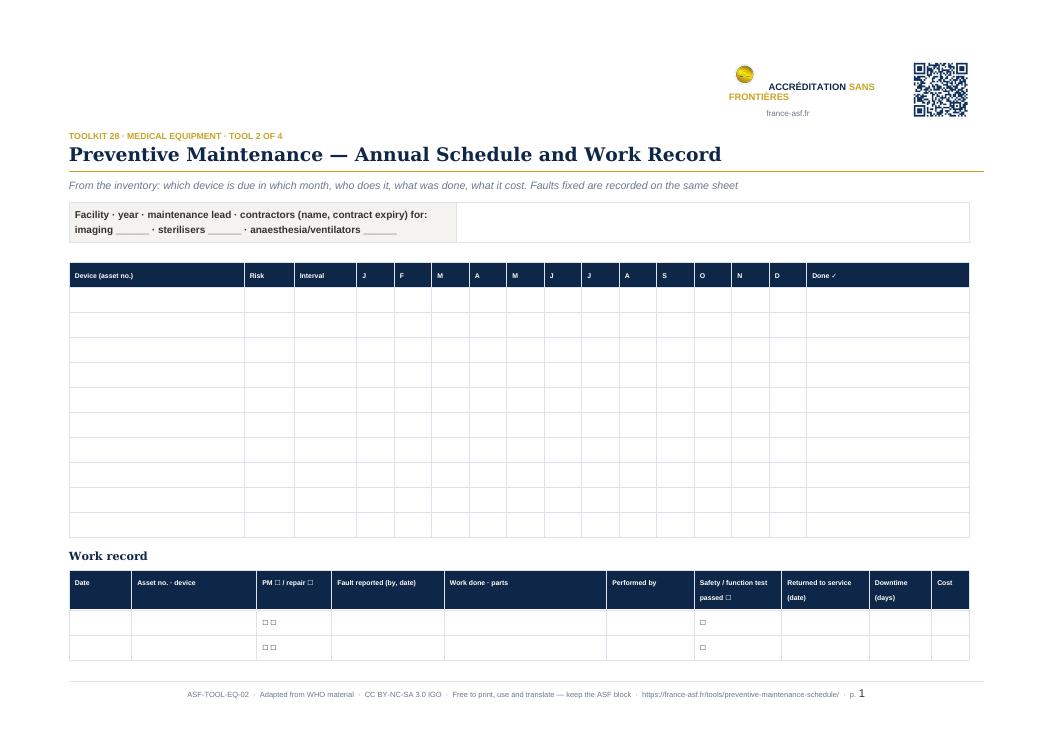 Preventive Maintenance — Annual Schedule and Work Record
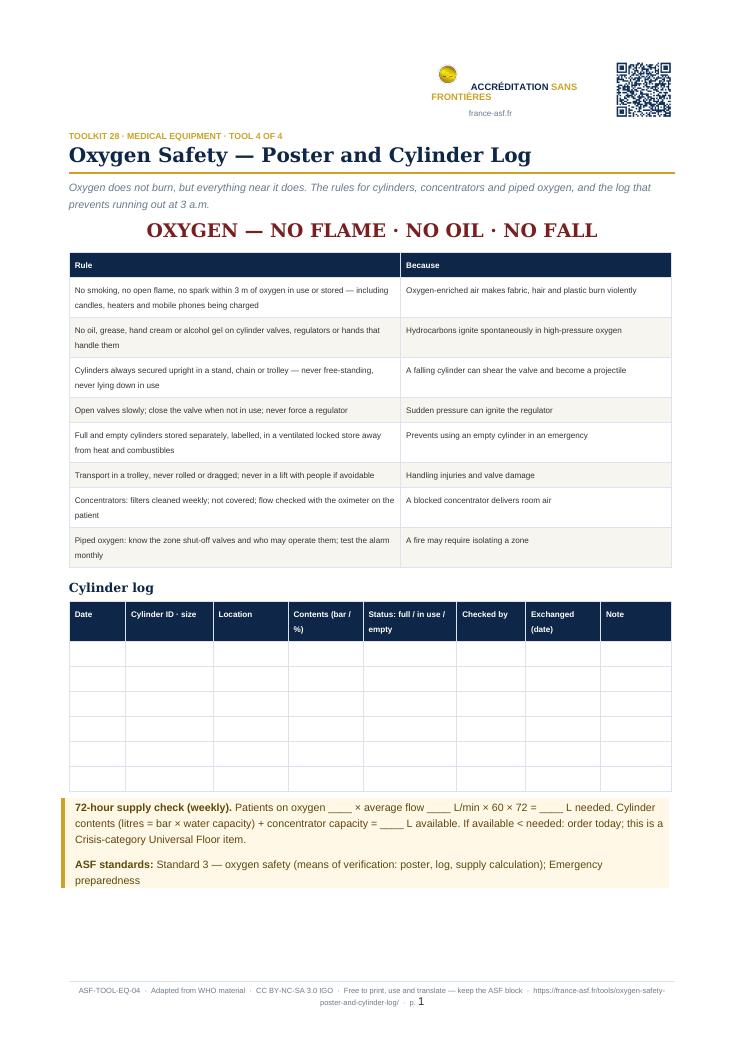 Oxygen Safety — Poster and Cylinder Log
Print to share.